
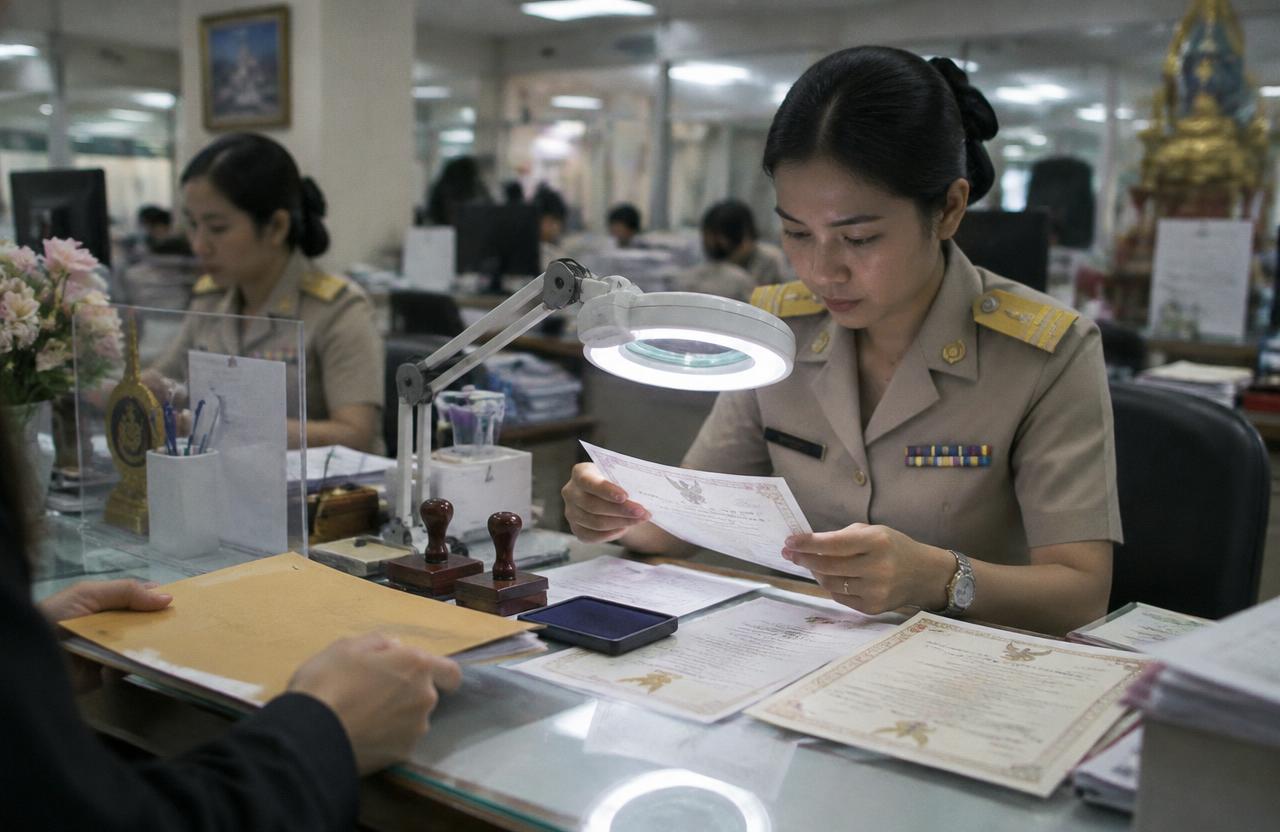
Thailand deposited its accession to the Apostille Convention on 30 June 2026, and the Convention enters into force for Thailand on 28 February 2027. Until then, Thai documents for use abroad still need Department of Consular Affairs authentication and destination-embassy legalisation, and foreign documents for use in Thailand still need Thai embassy legalisation. After that date, apostilles apply only between Thailand and member states that have not objected to Thailand's accession.
Last reviewed: 2026-10-29 · General information only, not legal advice for your specific case
Verified timeline
The reference is the HCCH status table, the official record for the Convention. Claims that apostilles work for Thailand before this date are incorrect.
| Date | Event |
|---|---|
| 30 June 2026 | Thailand deposits accession to the Apostille Convention |
| Before entry into force | Member states may object to Thailand's accession within the Convention's period |
| 28 February 2027 | Convention enters into force for Thailand |
Before 28 February 2027
- Thai documents for use abroad: Legalization Division, Department of Consular Affairs, then the destination embassy in Thailand if required
- Private documents such as powers of attorney: sign before a Notarial Services Attorney before filing at Consular Affairs
- Foreign documents for use in Thailand: authenticate under the origin country's system, then the Thai embassy or consulate there, then translate into Thai and certify the translation at Consular Affairs where Thai authorities require it
After 28 February 2027
Thailand's designated competent authority will issue a single certificate for Thai public documents used in member states, without destination-embassy legalisation. Apostilled documents from member states will be usable in Thailand without Thai embassy legalisation.
An apostille certifies only the signature, capacity and seal of the issuer, not the content, and recipients may still require a translation.
Non-member countries
Countries outside the Convention, such as the United Arab Emirates, still require legalisation after the date. Check the destination in the HCCH table before planning.
Planning during the transition
1. Check your filing date
If you file before 28 Feb 2027, use legalisation.
2. Check the destination's status
Member or not, and whether it objected to Thailand.
3. Ask the recipient
Some authorities may need time to adapt.
4. Follow Consular Affairs announcements
Thai authorities will publish the competent authority and filing procedure.
Frequently asked questions
Can I get an apostille on a Thai document now?
No. The Convention enters into force for Thailand on 28 February 2027.
Are documents legalised before that date still usable?
Legalisation is the valid method before entry into force; acceptance afterwards is up to the recipient.
Does an apostille need translating?
The recipient may require translation of the document and the apostille.
Does the UAE accept apostilles?
The UAE is not a party, so legalisation is still needed. See the non-member guide.
What does it cost?
Please contact our team for a quotation; government fees are paid at the authority's rates.
Official sources
Related services
Start by sending the basics
Tell us about your situation and what you need checked. We will reply with the documents and steps that apply to your case.
Contact the team