
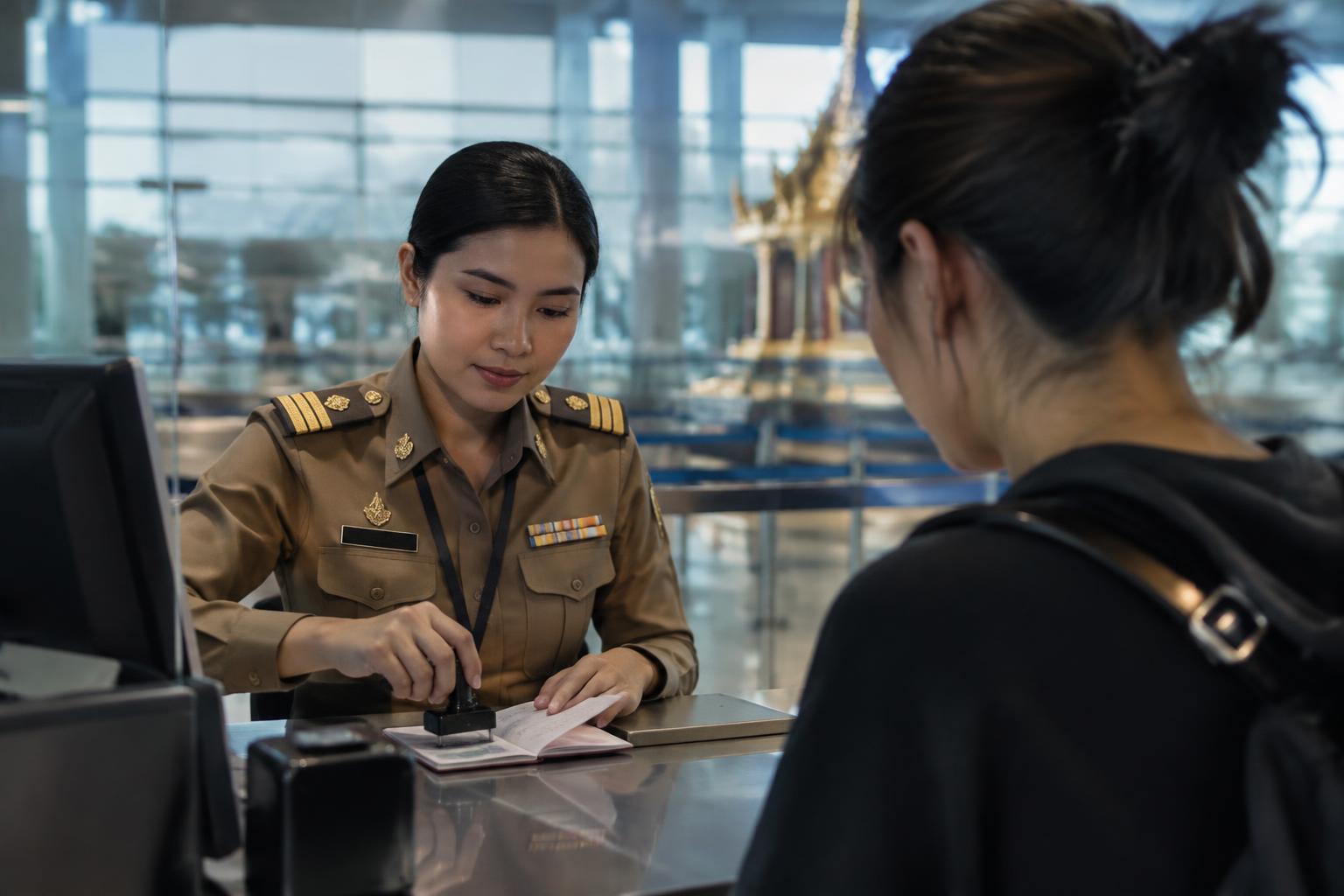
Holders of single-entry Thai visas or extensions of stay — such as work, study or retirement stays — lose their permission to stay the moment they leave Thailand unless they hold a Re-entry Permit. The permit comes in two forms: Single (one return) and Multiple (unlimited returns until the stay expires). Apply at an immigration office or at the airport immigration counter before departure.
Last reviewed: 2026-10-04 · General information only, not legal advice for your specific case
Why a Re-entry Permit Is Needed
Thai immigration law provides that leaving the Kingdom ends your permission to stay, unless you hold a Re-entry Permit obtained in advance. A single-entry visa holder who leaves without one must apply for an entirely new visa to return.
A common case is the holder of a Non-Immigrant B (work) or O (family, retirement) visa who has extended their stay annually inside Thailand. That extension is a single permission to stay; departing without a Re-entry Permit ends the remaining stay immediately, even if the expiry date has not arrived.
Holders of valid multiple-entry visas, such as multiple-entry tourist visas or certain Non-Immigrant categories, do not need a Re-entry Permit because the visa already allows multiple entries.
Single vs Multiple
A Single Re-entry Permit allows one departure and return under the current permission to stay. It suits those with a single planned trip before their stay expires.
A Multiple Re-entry Permit allows unlimited departures and returns until the current permission to stay ends. It suits frequent travellers, such as employees who travel abroad regularly. The Multiple fee is higher than the Single fee, per the Immigration Bureau's schedule.
Neither type extends the stay itself. The permit is valid only while the underlying permission to stay remains valid; when the stay expires, the Re-entry Permit ends with it.
Where to Apply
Apply at immigration offices nationwide, such as Immigration Division 1 (Chaeng Watthana) or provincial immigration offices. Applying in advance at an office leaves time to review documents and fix problems.
Those departing by air can apply at the departure immigration counter at airports such as Suvarnabhumi and Don Mueang on the day of travel. Allow extra time before check-in as there may be queues, and service hours can be limited at some times.
The Immigration Bureau offers online applications for some cases. Check current channels on immigration.go.th before travelling.
Required Documents
The core documents are your original passport, form TM.8, a photograph, and copies of the passport bio page and the latest permission-to-stay stamp. If applying at the airport, bring everything complete — there is no time to go back for missing items.
- Original passport with a valid permission to stay
- Completed form TM.8 with photograph
- Copies of the passport bio page and latest stamps
- Fee per the official schedule (Single or Multiple)
Cautions
A Re-entry Permit is tied to the current permission to stay only. When you extend your stay, the old permit ends and a new one is needed for further travel.
Permanent residence holders must obtain a separate Re-entry Permit every time they leave Thailand and must return within the permitted period, or their permanent residence may lapse.
Do not confuse the Re-entry Permit with 90-day reporting — they are separate obligations. Holding a Re-entry Permit does not exempt you from reporting, and each new entry restarts the 90-day count.
If your work permit is tied to your stay, letting the stay lapse can affect your work status too. Plan travel to align with the renewal of both.
What Each Visa Holder Should Watch
Holders of a Non-Immigrant B visa who extend their stay annually inside Thailand hold a single permission to stay. Every departure needs a Re-entry Permit, however short the trip. Forgetting can affect the stay and often the linked work permit as well.
Holders of a Non-Immigrant O visa for family or retirement are under the same rule: the annual extension is a single permission to stay. Retirees who regularly travel home usually choose the Multiple permit.
Student (ED) visa holders extending in Thailand must also obtain a Re-entry Permit. Leaving without one ends the study stay and can affect the next extension.
A single-entry tourist visa holder who has not yet entered Thailand has no use for a Re-entry Permit — it is for people already in Thailand who leave before their stay ends.
Common Scenarios
Forgot until reaching the airport: the departure immigration counter accepts applications on the travel day, but allow extra time and bring photographs and document copies. Incomplete documents may force a choice between delaying the flight or letting the stay lapse.
New passport: a Re-entry Permit in an old passport must be transferred or reissued by the Immigration Bureau. Carry both passports during the transition.
Stay nearing expiry: a Re-entry Permit does not extend the expiry date. If the stay expires while you are abroad, the permit cannot bring you back — extend or obtain a new visa first.
How It Relates to 90-Day Reporting
90-day reporting and the Re-entry Permit are separate obligations. Holding a permit does not exempt you from reporting, and reporting does not preserve your stay when you leave the country.
Each return to Thailand on a Re-entry Permit restarts the 90-day count from the entry date. Frequent travellers often never reach a reporting deadline, but should track each entry date systematically.
The Application Step by Step
Prepare before travelling: check the stay expiry date in your passport, copy the personal data page, the latest entry stamp and any extension stamp, and complete form TM.8 in advance to save time at the office.
At the immigration office: take a queue number, submit the documents with photographs, pay the fee, and wait for the passport to be returned with the Re-entry Permit stamp. It is usually quick when documents are complete, though long holiday periods bring crowds.
At the airport: the departure immigration counters at major airports accept applications on the travel day. Arrive at least an hour earlier than usual, because a long queue can affect check-in time.
On returning to Thailand: tell the officer you hold a Re-entry Permit and present the stamped page. Check that the entry stamp continues your existing permission to stay rather than recording a fresh visitor entry.
Practical Scenarios by Visa Type
Retirement (Non-Immigrant O-A or an extension based on retirement): your yearly extension is usually granted as a single permission to stay. If you plan several trips home during the year, a Multiple Re-entry Permit is normally the practical choice, and you should keep your bank or income evidence up to date because the next extension is assessed on its own merits.
Marriage or family extension: the extension stamp is tied to your relationship with a Thai spouse or child. Leaving without a Re-entry Permit ends that extension, and starting again typically means a new Non-Immigrant visa and a fresh extension application with the full set of family documents, translations and certifications.
Business visa with a work permit: your employer's paperwork, the work permit and the extension of stay all depend on each other. Before a business trip, confirm the extension remains valid for the whole time you will be away, apply for the permit, and tell your HR team so that payroll and reporting are not disrupted.
Students and dependants: an education extension or dependant extension follows the same rule. Parents travelling with children should check that each child's passport carries its own Re-entry Permit, because the permit is issued per person, not per family.
Long-term programmes such as LTR or Thailand Privilege: these normally come with multiple-entry rights, so a Re-entry Permit is often unnecessary. Check the endorsement in your passport, because the answer depends on exactly what was issued to you.
Our Role
We check whether your permission to stay requires a Re-entry Permit, prepare the form and document copies, and translate supporting documents where needed.
Approval rests solely with the Immigration Bureau. We are not a government agency and cannot promise any outcome.
Frequently asked questions
What happens if I leave Thailand without a Re-entry Permit?
Your permission to stay ends immediately. Returning requires a new visa or entry right. Holders of valid multiple-entry visas are unaffected.
Should I choose Single or Multiple?
Choose Single for one planned trip before your stay expires; Multiple is better value for frequent travel. Both are valid only while the underlying stay remains valid.
Can I apply at the airport on my departure day?
Yes, at departure immigration counters at major airports such as Suvarnabhumi and Don Mueang, but allow extra time and bring complete documents.
Does a Re-entry Permit extend my visa?
No. It is valid only while your current permission to stay remains valid.
After extending my stay, is my old Re-entry Permit still valid?
No. The permit is tied to that period of stay; after a new extension you must apply again if you plan to travel.
Do I still need to file 90-day reports if I hold a Multiple Re-entry Permit?
Yes. A Re-entry Permit does not replace 90-day reporting. When you return from abroad the 90-day count restarts from your latest entry date, so note the new due date and file on time.
Does a work permit holder need a Re-entry Permit?
A work permit is separate from your permission to stay. If your visa or extension is single entry, you need a Re-entry Permit before leaving, otherwise both the stay and the basis for your work permit can be lost.
Can someone else apply on my behalf?
Applications are generally made in person by the passport holder. Rules for representatives vary by office, so confirm with the immigration office handling your case before relying on a representative.
Official sources
Related services
Get Your Re-entry Permit Documents Ready Before You Fly
Let us check your stay status and prepare the form and document copies so everything is complete before your travel day.
Contact the team