
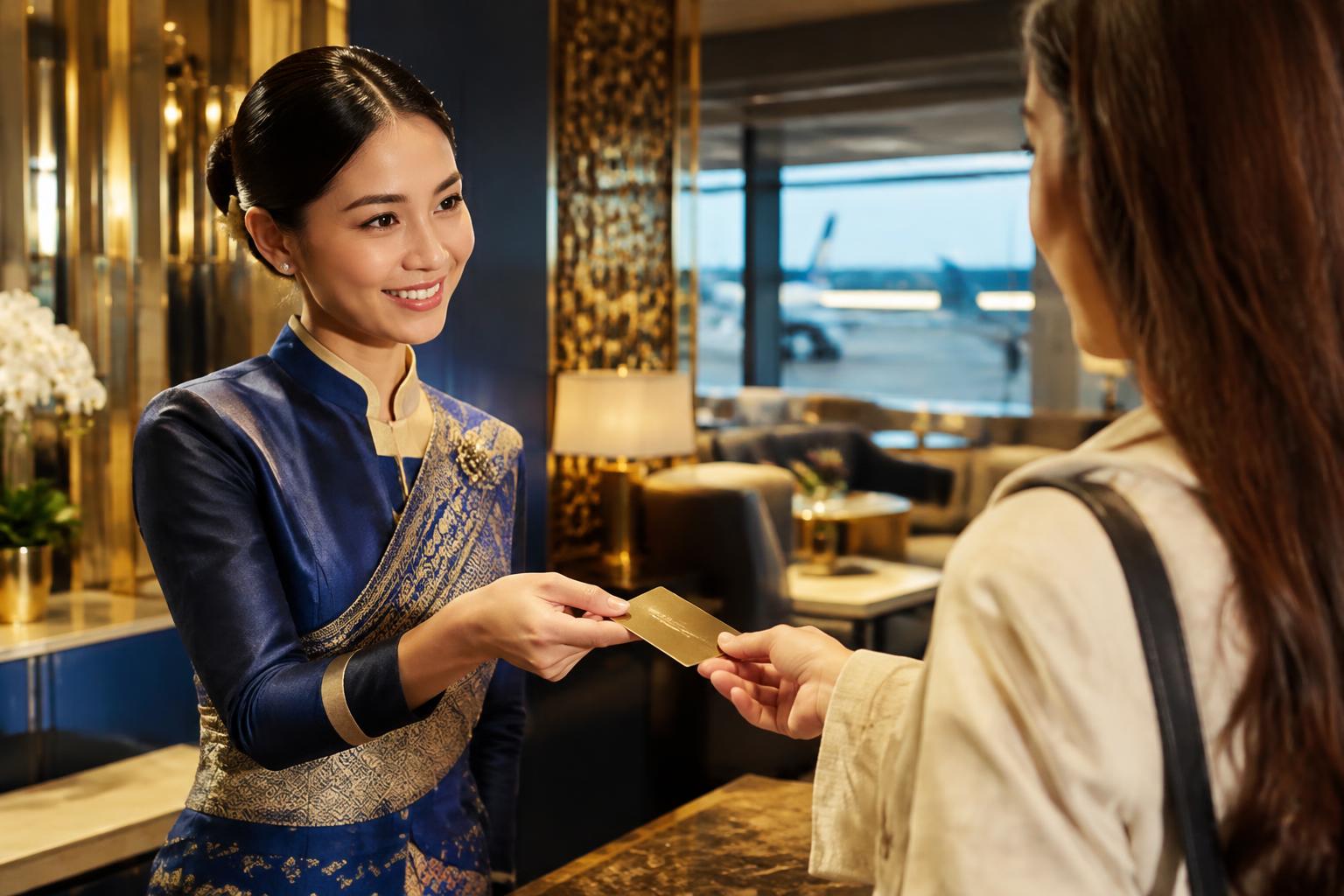
Thailand Privilege (formerly Thailand Elite) is a state-run membership programme that grants foreign nationals long-term residency visas of 5–20 years depending on the package: Bronze, Gold, Platinum, Diamond or Reserve. Members receive a multiple-entry visa, airport assistance services and annual Privilege Points redeemable for benefits. Applications require a background check by Thai authorities, and the visa does not by itself grant the right to work in Thailand.
Last reviewed: 2026-10-04 · General information only, not legal advice for your specific case
What Thailand Privilege Is
Thailand Privilege is a membership programme operated by Thailand Privilege Card Co., Ltd., a state enterprise under the supervision of the Tourism Authority of Thailand. Members receive a Privilege Entry Visa, a long-term multiple-entry residency visa valid for the duration of the chosen package.
The programme suits people who want to reside in Thailand long term without a Thai employer, who are not of retirement age, or who do not qualify for other visa categories — for example remote workers, investors, or frequent travellers who value convenience.
Membership is not equivalent to citizenship or permanent residence, and it does not grant the right to work in Thailand. Anyone intending to work needs a separate work permit.
Membership Packages
The programme currently offers five main tiers, differing in visa duration, membership fee and the annual Privilege Points allocation. Current details and prices are published on thailandprivilege.co.th and may change, so check before deciding.
- Bronze — 5-year visa, the entry-level package for trying out long-term stays
- Gold — 5-year visa with a higher annual points allocation
- Platinum — 10-year visa for those planning a longer stay
- Diamond — 15-year visa with premium benefits and points
- Reserve — 20-year visa, by invitation only and limited in number
The Privilege Points System
Each package comes with an annual allocation of Privilege Points, redeemable for benefits such as airport transfers, lounges, golf, spa treatments and government-liaison assistance. Unused points may not roll over to the next year, depending on current terms.
Some benefits, such as the Elite Personal Assistant service at the airport, are typically included without deducting points, while others deduct a set number of points. The benefits list and point rates are reviewed periodically.
Applicant Eligibility
Applicants must be foreign nationals holding a passport from a country that has relations with Thailand, with no imprisonment record (except for negligence offences), no history of Thai visa revocation or serious overstay, no entry ban, and no bankruptcy declaration.
Applicants must pass a background check conducted by the relevant Thai authorities. This stage usually takes several weeks and is the longest part of the application.
Holders of passports from certain countries may face additional conditions or may not be eligible. Check the list of eligible nationalities on the programme website.
Application Steps
Applications go through the programme's own channels or an authorised sales agent (GSSA). The general steps are:
- Submit the application form with a passport copy and photograph
- Wait for the background check by Thai authorities, usually several weeks
- Once approved, pay the membership fee for the chosen package
- Receive the welcome letter and book a visa affixation appointment
- Have the visa affixed at an immigration office in Thailand or a Thai embassy abroad
Documents to Prepare
The core documents are a passport bio-page copy, a photograph and the application form. If family members apply under a package that supports them, relationship evidence such as a marriage certificate or birth certificate may be required.
Relationship documents issued by another country usually need to be legalised before use in Thailand — for example, legalisation by the issuing country's foreign ministry and the Thai embassy, or an Apostille for countries party to the Convention. Thailand will begin using the Apostille system in 2027; until then, foreign documents for use in Thailand still follow the traditional legalisation chain.
Documents in other languages need a certified English or Thai translation. We translate and certify these documents.
Limitations to Know Before Applying
The Thailand Privilege visa is a residency visa, not a work permit. Members who intend to work in Thailand need a work permit under labour law, obtained separately.
Members must still meet ordinary immigration obligations, such as 90-day reporting and address notification (TM.30). The programme offers some assistance, but responsibility remains with the member.
The membership fee is a substantial sum and is subject to the programme's cancellation terms. Read the current membership terms before paying.
Compared With Other Long-Term Visas
Thailand Privilege differs from the LTR (Long-Term Resident) visa in that the LTR sets income, investment or skill criteria and grants certain privileges such as a digital work-permit exemption for some groups, while Thailand Privilege has no income criteria but grants no work rights.
Retirees aged 50 and over may consider the Non-Immigrant O-A or O-X visa, which costs less but requires financial evidence and health insurance meeting the criteria.
The right visa depends on purpose, income, age and work plans. Compare the current conditions of each category before deciding.
Family Members and Group Applications
Some package tiers allow additional applications for family members, such as a spouse and children, with their own fees and conditions. Relationship evidence must be clear and legalised through the proper chain.
A spouse married abroad needs a legalised marriage certificate with a translation, and children need birth certificates. If a child travels with only one parent, a consent letter from the other parent is sensible preparation for travel generally.
Family conditions differ by package and are updated from time to time. Check the latest details with the programme before planning a joint application.
Tax and Residence Considerations
Holding a long-term visa does not determine tax residence. Anyone present in Thailand for 180 days or more in a tax year may be a Thai tax resident, with filing obligations under the law — particularly for foreign-sourced income brought into Thailand under Revenue Department rules.
Tax questions depend on individual circumstances, such as income sources, nationality and double-taxation treaties. Consult a tax adviser before committing to long-term residence.
Renewal, Transfer and Cancellation
As a package nears expiry, members may renew or upgrade to another tier under the programme's terms at that time. Transferring membership to another person is restricted and may carry a fee. Read the current membership terms.
Cancelling membership ends the visa with it. Anyone wishing to remain in Thailand needs another visa category in place; planning ahead avoids a gap in residence status.
Living in Thailand on a Privilege Visa
Long-term visa holders typically need to arrange basics such as a bank account, health insurance and long-term housing. Each institution asks for different documents, and some request a letter from the programme or the Immigration Bureau.
Driving in Thailand requires a Thai driving licence or a valid international driving permit. Long-term residents should obtain a Thai licence, which needs a residence certificate and a medical certificate.
Members with school-age children should plan international school places early, as leading schools have waiting lists. Foreign education documents often need translation and legalisation when submitted to Thai institutions.
A benefit members frequently use is administrative assistance, such as help scheduling 90-day reporting, which reduces the need to visit an immigration office in person every time.
Our Role
We translate and certify supporting documents for applications, such as marriage certificates, birth certificates and relationship evidence, certify true copies before a Notarial Services Attorney, and coordinate legalisation at the Ministry of Foreign Affairs.
We are not a sales agent of the Thailand Privilege programme and do not submit membership applications on behalf of applicants. Approval rests with Thailand Privilege Card Co., Ltd. and the Thai authorities conducting the background check. We cannot promise any outcome.
Frequently asked questions
Is Thailand Privilege the same as Thailand Elite?
Yes — the same programme, renamed from Thailand Elite to Thailand Privilege, with new packages: Bronze, Gold, Platinum, Diamond and Reserve.
Can I work in Thailand on a Thailand Privilege visa?
Not automatically. It is a residency visa; working requires a separate work permit.
Do members need to do 90-day reporting?
Yes, under immigration law. The programme offers some assistance, but responsibility remains with the member.
How long does the application take?
The background check usually takes several weeks; payment and visa affixation follow approval. Total time varies by case.
How must foreign documents be certified?
Documents such as marriage or birth certificates issued abroad generally need legalisation and an English or Thai translation. Thailand will adopt Apostille in 2027.
Official sources
Related services
Prepare Your Thailand Privilege Documents
Send us your relationship and foreign-issued documents. We translate, certify copies and coordinate legalisation end to end.
Contact the team