

A lawful move to Thailand starts with a visa that matches your real purpose, followed by a work permit if you will work, address notification within 24 hours, and 90-day reporting. Foreign documents such as birth certificates, marriage certificates, and police clearances must be translated and certified before use in Thailand. A good checklist splits the work into three phases: before departure, the first 30 days, and the first 90 days.
Last reviewed: 2026-10-04 · General information only, not legal advice for your specific case
Step one: the visa must match your real purpose
The most common mistake new arrivals make is entering on a tourist visa or visa exemption and then starting work or staying long term, which breaches the entry conditions. Each visa type is built for a specific purpose: Non-Immigrant B for work and business, Non-Immigrant O for family and retirement, Non-Immigrant ED for study, and long-term options such as the LTR visa for qualifying groups.
Choosing the wrong visa at the start affects every later step, from the work permit and bank account to extensions of stay. Plan the visa before booking the flight, not after.
It is also worth knowing what a visa is not. A visa is permission to seek entry; the immigration officer at the airport stamps the actual period you may stay, and that stamp — not the visa sticker — is the date that matters. An extension of stay is a separate procedure done inside Thailand at the immigration office, with its own evidence requirements. Many newcomers confuse the visa's validity period with their permitted length of stay and overstay as a result. Overstay carries daily fines and, in longer cases, entry bans, so checking the stamp in your passport on the day you arrive is a habit worth building.
If your situation changes after arrival — a new job, marriage to a Thai national, or retirement — the correct path is usually a change of visa type or a new extension basis at the immigration office, not simply letting the old permission run. Each basis has its own financial and documentary thresholds, and switching early is far easier than fixing an expired status.
Foreign documents to prepare before departure
Documents not in Thai or English need a certified translator, and many must be further legalized by the issuing country's foreign ministry or a Thai embassy before departure. Completing this from abroad is usually faster than after arrival in Thailand.
Keep both the originals and two sets of copies of everything, and store digital scans where you can reach them from your phone. Thai offices frequently keep the copy you hand over, and replacing a lost foreign certificate from inside Thailand is slow. It also helps to carry a short cover note listing each document, its issue date, and its certification chain, because officers at different counters often ask for the same papers in a different order.
- A passport with at least six months of validity, plus copies of the data page
- Birth, marriage, and divorce certificates (if any), translated and certified, for family-based visas
- A police clearance certificate from your home country, required by several Thai authorities for work permits or long-term visas
- Education diplomas and employment verification letters for work permits and the LTR visa
- A medical certificate and health insurance evidence as each visa type requires
- Financial evidence such as bank statements or a pension verification letter for retirement visas
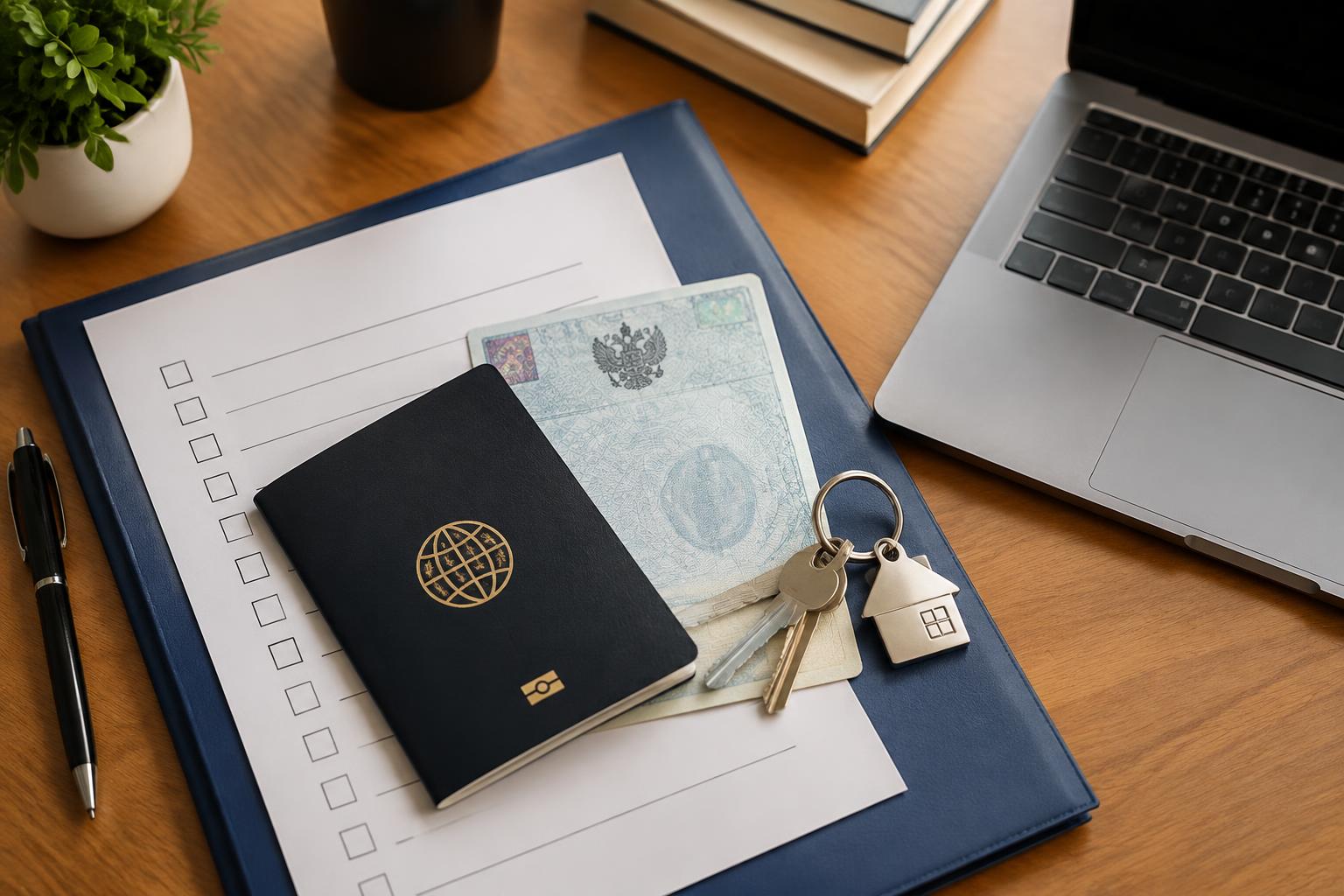
The first 30 days in Thailand: what to do immediately
1. Address notification (TM.30)
Your landlord must notify immigration within 24 hours of your arrival. Confirm it was actually filed, because the receipt is needed for many other transactions.
2. Apply for the work permit
Anyone who will work needs a work permit from the Ministry of Labour before starting. The employer usually prepares the company-side documents.
3. Open a bank account
Prepare your passport, work permit, or a residence certificate. Each branch asks for different documents, so call ahead.
4. Get a Thai driving licence or check IDP validity
An international driving permit works temporarily under conditions; long-term residents should obtain a Thai licence from the Department of Land Transport.
5. Register health insurance and a local doctor
Check that your policy covers hospitals near your home and save emergency numbers.
6. Record your first 90-day date
Set a reminder for your first 90-day report counted from your entry date. Missing it carries a fine.
90-day reporting and staying long term
Foreigners staying in Thailand continuously for more than 90 days must report their address to immigration every 90 days, in person, by post, or online for those who meet the conditions. Missing a report carries a fine and can affect your next extension of stay.
Annual extensions require preparation at least a month ahead, especially financial evidence that must show the required balance for a set period before the application date. Planning a document calendar for the whole year from your first month prevents last-minute rushes.
Two more obligations catch long-term residents by surprise. If you leave Thailand and plan to return before your permission to stay expires, you need a re-entry permit, or your permission lapses when you depart. And if you move to a new address, the TM.30 cycle restarts with the new landlord. Both are simple procedures, but only if you know about them before the deadline passes.
Families should also plan for document renewals that fall due at different times: passports, visa extensions, work permit renewals, and school enrolment papers rarely align. A single shared calendar with every family member's dates, reviewed monthly, is the simplest system that works.
Where we help in your move
We are a single point for every document in your relocation: translation and certification of birth certificates, marriage certificates, diplomas, and police clearances; notarization; coordination of further legalization at the Ministry of Foreign Affairs; and preparation of document sets for visas, work permits, bank accounts, and driving licences.
Decisions by government authorities — visas, work permits, or bank accounts — remain at each authority's discretion. We make sure your documents are complete, correct, and consistent, which is the controllable part and the main reason applications get returned.
For families, we coordinate the document sets as one project rather than separate errands: the parents' work and visa papers, the children's birth certificates and school records, and the household's address notifications all affect one another. Sequencing them correctly — for example, obtaining the residence certificate before the driving licence appointment, or the TM.30 receipt before the bank visit — is what turns a month of confusion into a week of errands.
Frequently asked questions
Can I enter on a tourist visa and convert to a work visa later?
In some cases a visa conversion inside Thailand is possible, but it has conditions and no guaranteed outcome. The more reliable route is obtaining a Non-Immigrant visa from a Thai embassy before departure.
What is TM.30 and who files it?
TM.30 is the notification of a foreigner's residence to immigration within 24 hours. Filing is the landlord's duty, but you should confirm it was done because the receipt is used for many other transactions.
What if I miss a 90-day report?
Report at the immigration office as soon as possible; a fine applies under the regulations. Setting a calendar reminder or using a reminder service prevents future lapses.
Do documents already certified abroad need re-certification in Thailand?
It depends on the document type and the receiving authority. Some documents legalized by a Thai embassy abroad are accepted directly; others need further certification at Thailand's Ministry of Foreign Affairs. Check the receiving authority's requirements first.
Moving with children — what extra documents are needed?
Children need visas based on the parent's status, certified translated birth certificates for visa and school applications, prior school records for international schools, and sometimes health certificates and vaccination records.
How far ahead should I start preparing documents?
At least two to three months, because police clearances and overseas legalization take weeks, and some documents have limited validity, so the order of requests matters.
Official sources
Related services
Send us your document list before you move
Tell us why you are moving and which documents you already have. Our team will check what must be translated, certified, or requested, and sequence the steps against your real timeline.
Contact the team