
Foreigners can open a savings account with a Thai commercial bank, but there is no single document list that every bank uses. Each bank must identify customers and assess risk under Thailand's anti-money laundering law, and each writes its own internal policy. Branches typically ask for a passport with a valid visa or permission to stay, plus something that explains why you live in Thailand: a work permit, a Certificate of Residence from Immigration, or an embassy letter. Tourist-visa and visa-exempt entrants are refused most often, and the final decision always rests with the bank.
Last reviewed: 2026-10-04 · General information only, not legal advice for your specific case
Why one branch says yes and another says no
The most common frustration we hear is that a friend opened an account with one set of papers while another branch asked for more or refused outright. Thai law, chiefly the Anti-Money Laundering Act B.E. 2542 (1999) and its ministerial regulations, requires financial institutions to verify identity and assess risk before opening an account. It does not prescribe one document set for every foreigner, so each bank sets internal rules and branch staff must follow them.
In practice the bank wants to know three things: that you are who your documents say, that you have a clear reason to be in Thailand and to use an account, and that the account is unlikely to be used to receive illicit transfers. The crackdown on so-called mule accounts has made banks noticeably stricter with short-stay customers and people without a verifiable address.
Advice such as "shopping-mall branches are easier" or "bank X opens for everyone" is anecdotal and changes often. What genuinely helps is bringing documents that explain why you are in Thailand and checking with the branch before you go.
How your visa type affects your chances
Your permission to stay is the first thing staff check, because it shows how long you will be in Thailand and why. The table reflects general patterns, not any specific bank's rule.
| Status in Thailand | Supporting documents often requested | Typical outcome |
|---|---|---|
| Non-Immigrant B with work permit | Work permit or employer letter | Usually approved: clear employer and address |
| Marriage / family visa (Non-O) | Marriage certificate, Certificate of Residence | Often approved with a verifiable address |
| Retirement (Non-O / O-A) | Certificate of Residence or embassy letter | Often approved; a Thai account is commonly needed for the deposit requirement |
| Education visa (ED) | Letter from the school | Depends on branch policy |
| LTR / Thailand Privilege / DTV | Proof of status and Thai address | Inconsistent; ask the branch first |
| Tourist visa / visa exemption | Few documents help much | Refused most often |
Documents to bring to the branch
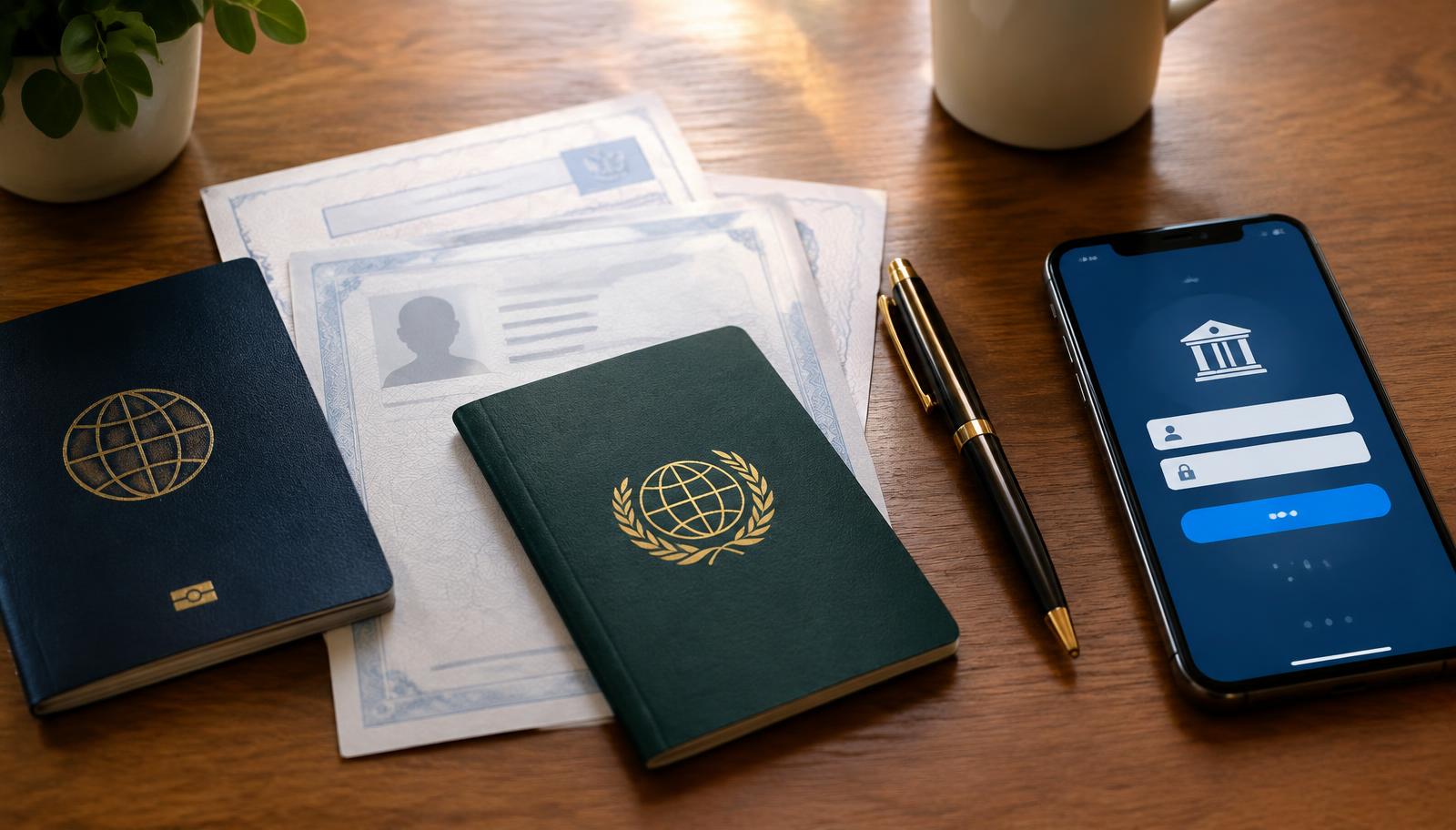
The core document is your original passport showing your current visa or latest extension stamp, plus your arrival card (TM.6) if you have one. Add supporting documents that match your status. Bringing more than requested does no harm; missing a single item can mean coming back another day.
A Certificate of Residence issued by Immigration is accepted by many branches as proof of address. Requirements vary by Immigration office, but you usually need proof of accommodation such as a lease or the TM.30 notification filed by your landlord. Some embassies issue address letters to their nationals, and some banks accept those instead.
- Original passport with an unexpired visa or extension
- Work permit, or an employment letter from your Thai employer
- Certificate of Residence from Immigration, or an embassy address letter
- Lease agreement or house registration book (Tor Ror 13), if you have one
- A Thai mobile number registered in your own name, for OTP and the banking app
- A working email address and your home-country tax identification number
- For retirement or marriage visas: the related visa supporting documents
FATCA and CRS forms at account opening
Thai banks report financial account information under international agreements, so every applicant completes a tax-status self-certification. US citizens and US tax residents are asked for IRS Form W-9 and a US taxpayer number under FATCA. Non-US persons usually complete a self-certification under the OECD Common Reporting Standard, listing their country of tax residence and its tax number.
Incomplete or inconsistent answers are a common cause of delay, so have your home-country tax number ready. The information is collected for reporting; opening the account does not by itself create extra tax.
Step by step: from first enquiry to a working app
1. Ask the branch in advance
Confirm the branch opens accounts for foreigners on your visa type and which documents it needs. Note the name of the staff member you spoke to.
2. Prepare documents and a Thai SIM
Copy your passport photo page and visa page, sign the copies, and make sure the phone number is registered in your name.
3. Forms and interview
Expect questions on the account's purpose, source of funds and how long you will stay. Keep answers consistent with your documents.
4. Identity verification and photo
Some banks scan your passport and take a facial photo to link to the mobile app.
5. Initial deposit and passbook
The minimum opening deposit depends on the account type and the bank.
6. Activate the app and PromptPay
Many banks let foreigners link PromptPay to a phone number. App transfers may carry daily limits set by bank policy.
Common refusal reasons and what to do
A refusal at one branch does not mean you cannot bank in Thailand, but understand the reason before trying elsewhere so you do not repeat it.
- Tourist visa or visa exemption with no Thai address evidence
- Phone number not registered in the applicant's name
- Name spelt differently across documents, such as a missing middle name or reversed order
- No clear explanation of the account's purpose or the source of funds
- Little time left on your permission to stay, or a passport close to expiry
- Foreign documents without a Thai or English translation the branch can read
Foreign currency deposit accounts and company accounts
If you regularly receive money from abroad, such as a pension or salary from a parent company, a Foreign Currency Deposit (FCD) account may help. Commercial banks offer these under the Bank of Thailand's exchange control rules. A baht savings account is often required first, and you should keep supporting records for incoming transfers.
Company accounts follow a separate process. Banks ask for the company affidavit, the shareholder list, board minutes approving the account, and identity documents for every authorised director. Some banks also verify the office in person. If a foreign director has not yet travelled to Thailand, plan the trip around the account appointment.
What we do, and what we do not
Only the bank can approve an account. No third party can instruct a bank to open one. Offers claiming an account is "certain", or suggesting you use an account in someone else's name, are warning signs and may involve offences under Thailand's mule-account laws.
What we can do is check that your documents are complete and consistent, translate and certify foreign documents such as marriage certificates or pension letters, help prepare your Certificate of Residence application, and send a Thai-speaking staff member to the branch with you if you would like.
Frequently asked questions
Can I open a Thai bank account on a tourist visa?
No law prohibits it outright, but most banks refuse because they treat it as high risk without a verifiable address. Some branches may accept an embassy address letter or other supporting evidence. Ask the branch first.
Where do I get a Certificate of Residence?
At the Immigration office covering where you live. Requirements vary by office but usually include your passport, photos and proof of accommodation. Some embassies also issue address letters to their nationals.
What is the minimum deposit?
It depends on the account type and the bank. Ordinary savings accounts usually need only a small opening deposit; some account types require more. Ask the branch directly.
Can I open an account online from abroad?
For individual foreigners, most Thai banks still require you to verify your identity in person at a branch.
Can I use a Thai account for the retirement-extension deposit?
Retirement extensions usually rely on a bank letter from a Thai bank confirming your balance. The amount and holding period are set by Immigration, so check the current rules before applying.
My name differs between my passport and other documents. What should I do?
Bring documents explaining the difference, such as a name-change certificate or marriage certificate with translation, and use your passport name on every form.
Official sources
Related services
Send us your document list before you visit the branch
Tell us your visa type, how long you will stay and which documents you already have. We will tell you what to add and which papers need translating.
Contact the team