
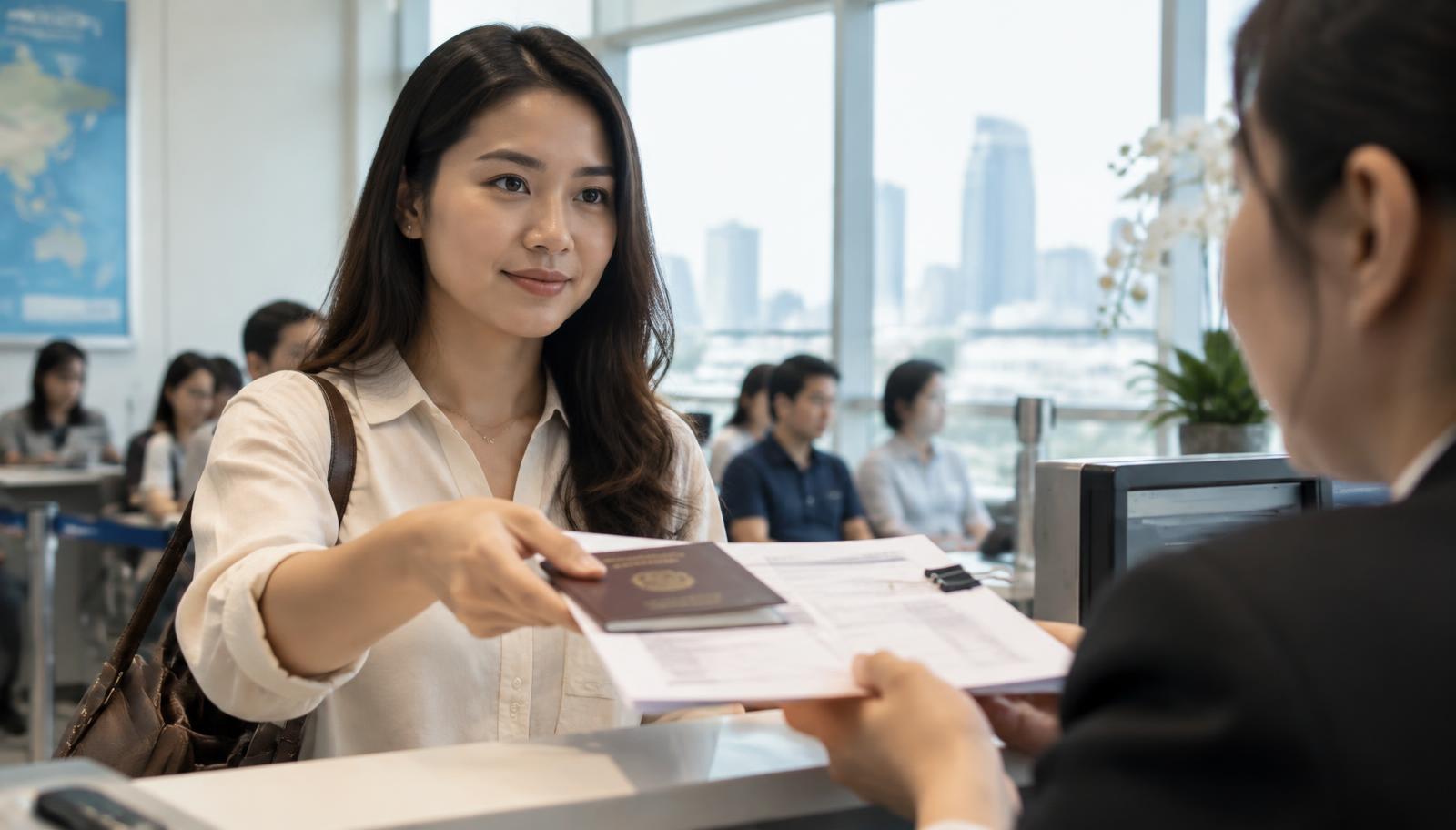
Thai ordinary passport holders can enter Japan for tourism, visiting relatives or friends, and short business meetings for up to 15 days per visit without a visa. Anyone staying longer than 15 days, working, studying, or joining a Japanese spouse must apply for the visa that matches the purpose. Long-term stays generally require a Certificate of Eligibility (COE), which the receiving party in Japan applies for at the Immigration Services Agency before the visa application is lodged in Thailand.
Last reviewed: 2026-10-04 · General information only, not legal advice for your specific case
The 15-day visa exemption: who it covers and what it does not
Japan grants a visa exemption to holders of ordinary Thai passports for short-term stays of up to 15 days. The exemption covers sightseeing, visiting family or friends, attending conferences or seminars, and business liaison that does not involve receiving remuneration from a source in Japan.
The exemption does not cover paid work, internships, long-term study, or any stay longer than 15 days, even when the purpose is purely tourism. If your itinerary runs to sixteen days, you need a short-term visa issued in advance. Extending an exempt stay inside Japan is not the normal route and should not be part of anyone's plan.
Visa-exempt entry is still entry at the discretion of the immigration officer at the port. Officers may ask about your plans and request evidence such as a return ticket, accommodation bookings, and sufficient funds. First-time travellers and anyone with a past overstay anywhere should carry these documents in their hand luggage rather than assuming they will not be asked.
Conditions, application channels, and arrival registration systems can change. Before every trip, check the current notices of the Embassy of Japan in Thailand. The information on this page was last reviewed on the date shown above and explains the structure of the process; it does not replace the embassy's official requirements on the day you apply.
Japanese visa categories Thai applicants use most
Choosing the category that matches what you will actually do in Japan matters more than anything else. Consular officers assess whether the documents support the stated purpose, and an application lodged under the wrong category usually has to be withdrawn and rebuilt from the start.
- Temporary Visitor beyond 15 days: long holidays, family visits, or short business trips. Relies on financial evidence, proof of employment in Thailand, and a day-by-day itinerary.
- Visiting relatives or acquaintances: usually requires an invitation letter and a sponsorship letter from the host in Japan, plus evidence of the relationship.
- Short-term business: a certificate from the Thai employer and an invitation from the Japanese counterpart naming the activities and who pays.
- Working visas (for example Engineer/Specialist in Humanities/International Services, or Specified Skilled Worker): require a COE obtained by the Japanese employer.
- Student: the Japanese school applies for the COE; the applicant prepares academic records and evidence of a financial sponsor.
- Spouse or Child of Japanese National: the marriage must be validly registered in both Thailand and Japan, and a COE is normally required.
Documents embassies typically request, and why files get queried
A short-term application typically includes a passport with sufficient validity, the application form, a photograph in the specified format, an itinerary, and financial evidence. The definitive list and current form versions are those published by the Embassy of Japan on the day you apply, and they differ by purpose and by whether you or a host in Japan is covering costs.
Financial evidence receives the closest scrutiny. Bank books or statements should show a natural, continuous history rather than a lump sum deposited shortly before the application. If someone else is paying, include proof of the relationship and that person's own financial documents and sponsorship letter. Consistency between the amount available and the length and cost of the trip matters more than any single figure.
Employment letters should be on company letterhead and state your position, salary, start date, and approved leave dates. Business owners substitute company registration certificates and commercial registration. Students submit an enrolment certificate. Retirees and homemakers show the source of their funds, such as pension statements or a spouse's employment evidence.
Thai-language documents such as the house registration, birth certificate, marriage certificate, or company affidavit generally need an English or Japanese translation. A translation that spells a name differently from the passport is one of the most common reasons an otherwise complete file is returned for clarification. Fix spelling before anything else.
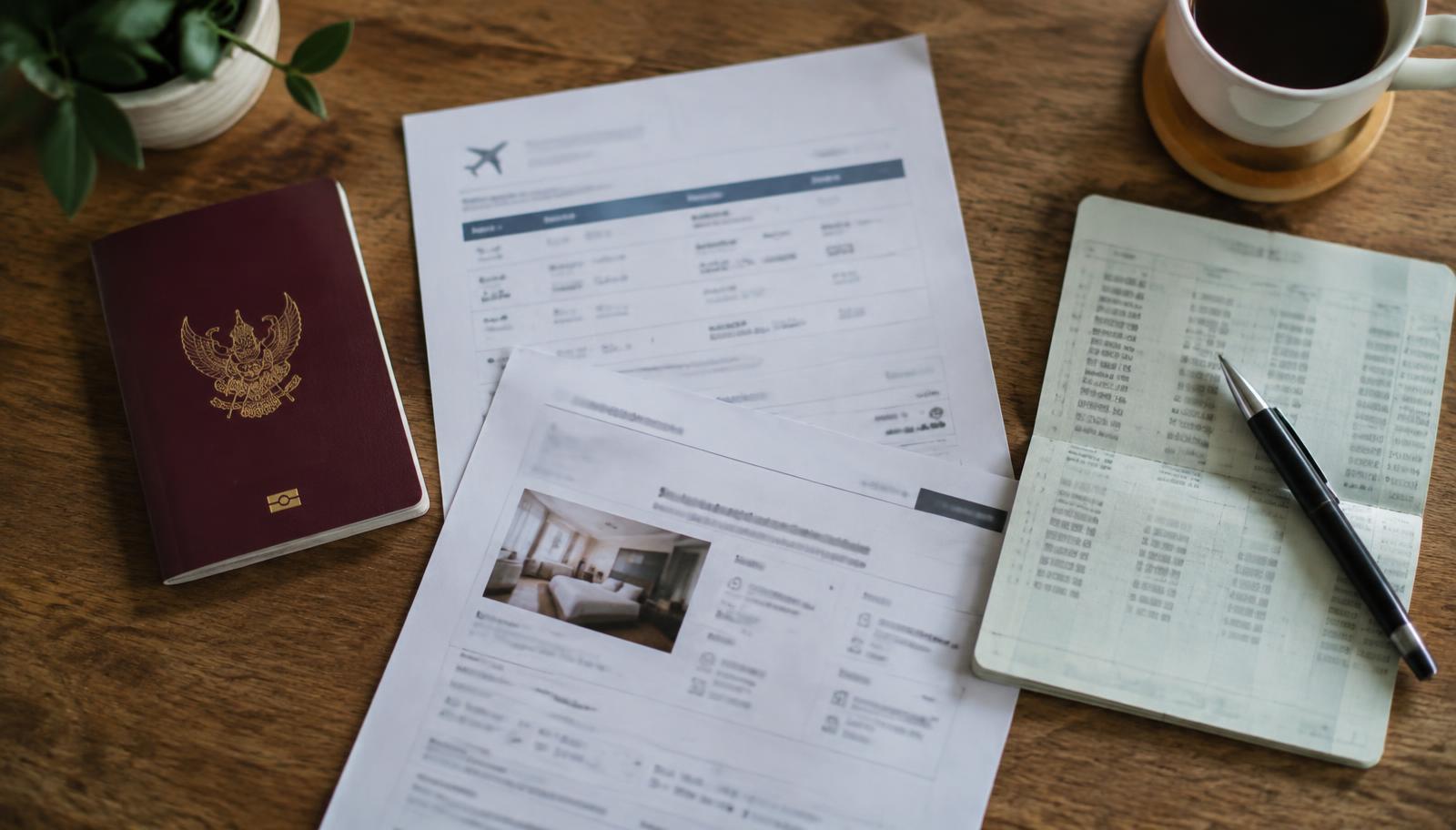
What a COE is and why work, study and spouse stays start in Japan
A Certificate of Eligibility is issued by a regional immigration bureau in Japan to confirm that the applicant meets the requirements of the status of residence being sought. The application is filed by a party in Japan — an employer, a school, or a Japanese spouse — rather than by the applicant in Thailand.
With a COE in hand, the visa application in Thailand is generally far quicker than an application without one. However, a COE has a limited validity period, so the visa application and the travel date must both be planned to fall inside that window. Booking flights before the COE arrives is a common and avoidable mistake.
The Japanese side typically asks the Thai applicant for degree certificates, transcripts, employment references, marriage certificates, and birth certificates. Most need Japanese or English translations, and some must be legalised by Thailand's Department of Consular Affairs before being sent to Japan, particularly civil-status documents used for spouse applications or family registration in Japan.
Because the employer or school submits the COE file, the Thai applicant often does not see how their documents are presented. Sending a clean, consistently translated set the first time reduces back-and-forth across two countries and two languages.
Special cases: children, older parents, and unmarried partners
Children travelling to Japan with one parent use the same rules as adults: up to 15 days without a visa. Carry an English translation of the birth certificate and a consent letter from the parent who is not travelling, because officers on both sides may ask about the relationship between the child and the accompanying adult.
Older parents without regular income who need a visa for a longer stay are usually sponsored by their children. The file then needs proof of the relationship, such as a translated house registration or birth certificate, together with the sponsor's income and bank evidence. If the sponsor lives in Japan, Japanese-side documents are required as well.
Unmarried partners who want to stay with a Japanese partner for more than 15 days cannot use the spouse category. They apply as visitors to an acquaintance, with an invitation, continuous evidence of the relationship over time, and a clear itinerary. Applicants who have changed their name after marriage or divorce should attach a translated name-change certificate so that bank, employment and passport records are clearly the same person.
A structured way to prepare a Japan visa application
Preparing everything once, in the right order, reduces requests for additional documents. The sequence below applies to almost every short-term case and can be adapted for COE-based applications.
1. Confirm purpose and length
Decide between visa-exempt entry and a visa based on what you will do and for how long.
2. Check the current checklist
Use the latest list from the Embassy of Japan or the application centre it designates.
3. Gather financial and employment evidence
Obtain documents issued within the period the embassy accepts.
4. Translate Thai documents
Translate into English or Japanese and check every name against the passport.
5. Assemble the file
Arrange documents in the order of the checklist and keep a complete copy.
6. Lodge and track
Apply through the designated channel and follow up within the published processing time.
Frequent reasons Japan visa applications are refused
The Embassy of Japan generally does not give detailed reasons for a refusal, and applicants are usually expected to wait a period before reapplying for the same purpose. Preventing a refusal is therefore much easier than recovering from one.
- Travel dates that do not match the leave approved by the employer.
- Bank balances that do not fit the trip, or unexplained large deposits shortly before applying.
- No convincing evidence of the relationship with the inviting person.
- A history of overstaying or unauthorised work in Japan or elsewhere.
- Inconsistencies between the form and attachments, such as address, job title, or marital status.
Our role, and what is outside our control
We review your file for completeness and internal consistency, translate Thai documents into English or Japanese through verifiable translators, arrange Department of Consular Affairs legalisation where documents are destined for a COE file or civil registration in Japan, and assemble the set in the order the embassy expects.
Visa decisions and permission to land rest solely with the Embassy of Japan and Japan's immigration authorities. We cannot promise an outcome, and we will never prepare or submit information that is not true.
Where a case is complex — a previous refusal, a past overstay, or a cross-border marital-status question — we recommend consulting a lawyer or a specialist in Japanese immigration law before applying, and we coordinate the documents they need.
Frequently asked questions
Do Thai citizens need a visa for Japan?
Not for tourism, visiting relatives, or short business stays of up to 15 days on an ordinary passport. Longer stays, work and study require a visa in the appropriate category.
Can a visa-exempt stay be extended in Japan?
Visa-exempt stays are not designed to be extended. If you plan to stay longer than 15 days, apply for a short-term visa from Thailand before travelling.
How much money do I need in my account?
The embassy does not publish a fixed minimum. It assesses whether the balance and account history are reasonable for the length and cost of the trip.
How long does a COE take?
It depends on the regional immigration bureau and the status sought, often several weeks to a few months. The applicant in Japan is notified directly.
Must Thai documents be translated into Japanese?
English translations are often accepted for short-term visas. COE files and civil registration in Japan commonly require Japanese. Confirm with the Japanese sponsor first.
Can I reapply immediately after a refusal?
Applicants are usually expected to wait before reapplying for the same purpose. Check the embassy's conditions and address the weaknesses in the file before applying again.
Official sources
Related services
Have your Japan visa file checked before you lodge it
Send your document list and travel plan. We check completeness and consistency and translate Thai documents into English or Japanese.
Contact the team