
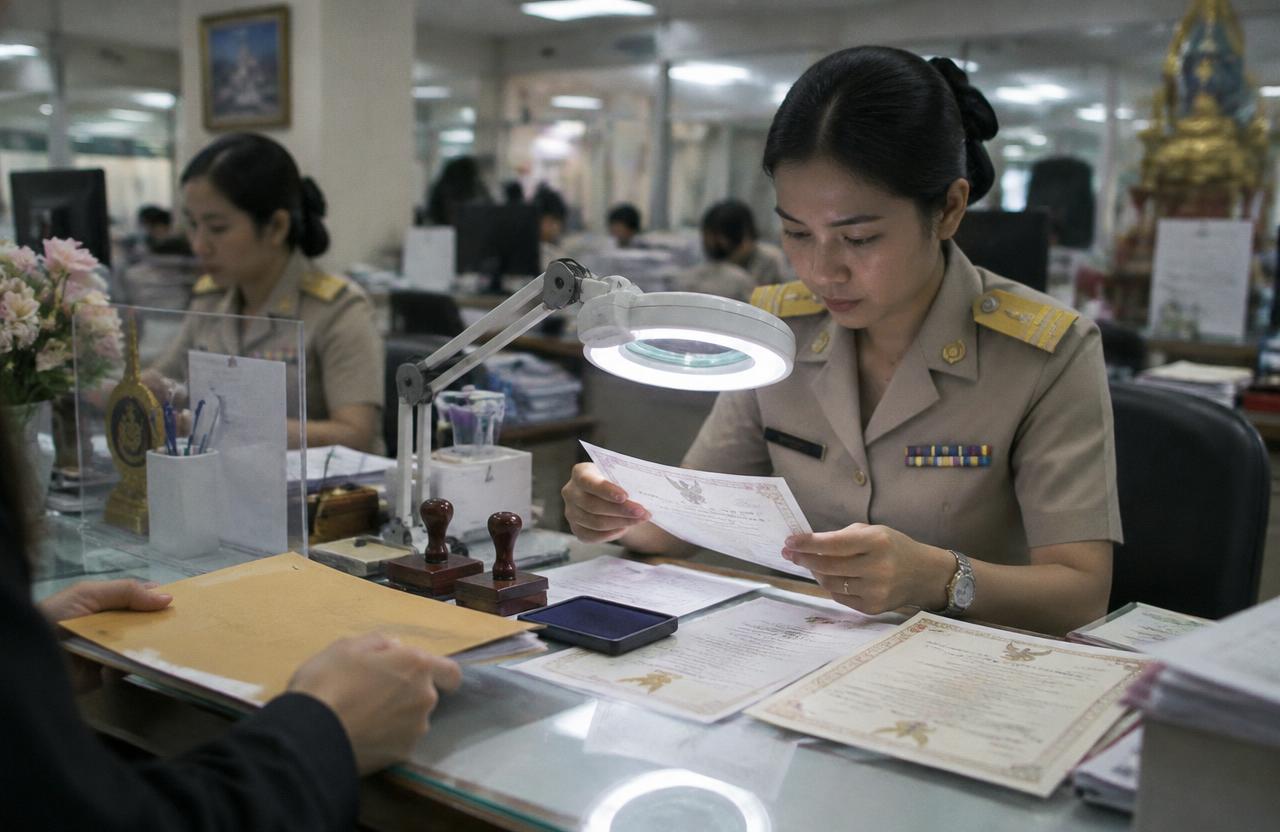
The Nationality and Legalization Division of the Department of Consular Affairs is at 123 Chaeng Watthana Road, Lak Si, Bangkok 10210, open Monday to Friday 08:30–16:30 except public holidays. The published fee is THB 200 per legalisation stamp or THB 400 per legalisation stamp (same-day). Officers check the signature and seal on your document against specimens lodged by the issuing authority. Filing for a company or another person requires a power of attorney and supporting papers, and fees are not refunded once paid.
Last reviewed: 2026-10-29 · General information only, not legal advice for your specific case
Address and office hours
The Department is at 123 Chaeng Watthana Road, Lak Si, Bangkok 10210. Its website lists office hours of Monday to Friday 08:30–16:30, closed on public holidays. The call centre is 02-572-8442.
Express cut-off times, queue arrangements and service points outside Chaeng Watthana change by announcement. Check the latest notice or call before travelling. We do not quote queue times that the Department has not published.
What Consular Affairs certifies
Legalisation confirms that the signature and seal of the official or authority on a document are genuine. It does not confirm that the content is correct. Officers search the specimen signatures lodged by that authority and compare them with your document.
If the issuing authority has not lodged a specimen, or the signatory has changed, that authority may need to certify the document again first.
Published fees
- Standard service: THB 200 per legalisation stamp
- Express service: THB 400 per legalisation stamp (same-day)
- Fees are per stamped sheet. If a document and its translation are stamped separately, each is charged.
- The Department states that fees are not refunded after payment in any case.
Company documents
According to the Department's FAQ, company documents must be filed with a power of attorney from a director bearing a 10-baht stamp duty, a copy of the company affidavit issued within 6 months stamped with the company seal and certified by a director, and a copy of the grantor's ID card.
Before you reach the counter
1. Check the recipient's requirements
Ask whether the original, the translation or both must be legalised, and whether an embassy step follows.
2. Translate and certify if needed
Thai-language documents for use abroad usually need translation first, filed together.
3. Private documents need a recognised signatory first
For example, a power of attorney or declaration must be signed before someone whose signature Consular Affairs can authenticate.
4. Prepare a power of attorney for proxy filing
With ID copies of both grantor and proxy.
5. Check queue and cut-off notices
On the Department's website or call centre before you travel.
After legalisation
Most destinations still require legalisation by their embassy in Thailand until the Apostille Convention enters into force for Thailand on 28 February 2027. After that, member states that do not object to Thailand will accept an apostille without an embassy step.
Frequently asked questions
Must I go in person?
No. A proxy can file with a power of attorney and ID copies of both parties.
Does Consular Affairs confirm the document's content?
No. Legalisation authenticates the signatory's signature and seal, not the content.
Can I get a refund?
The Department states fees are not refunded after payment in any case.
Can Consular Affairs issue an apostille now?
Not yet. The Convention enters into force for Thailand on 28 February 2027. Until then, legalisation plus an embassy step applies.
Can your office file for me, and what does it cost?
Yes. Cost depends on documents and steps; please contact our team for a quotation.
Official sources
Related services
Start by sending the basics
Tell us about your situation and what you need checked. We will reply with the documents and steps that apply to your case.
Contact the team