
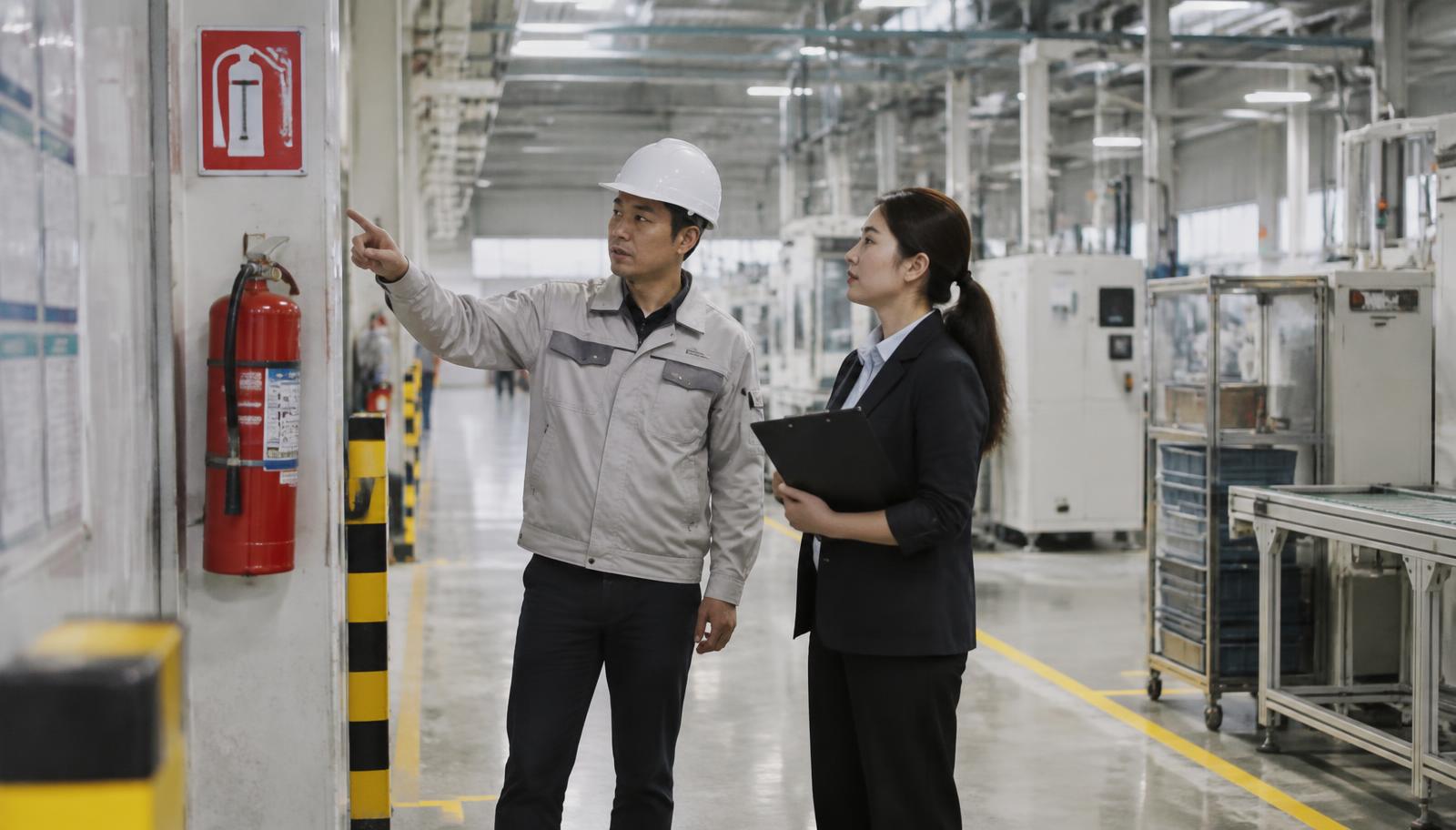
Under the Factory Act B.E. 2535 (1992), as amended in 2019, a facility counts as a factory when it uses machinery totalling 50 horsepower or more, or employs 50 or more workers. Type 3 factories must hold a licence (Ror.Ngor.4) from the Department of Industrial Works or the provincial industry office before operating, or an equivalent permit from the Industrial Estate Authority of Thailand inside an IEAT estate. Since the 2019 amendment, licences no longer expire, but annual fees and compliance duties continue. To trade across borders, the company also registers as an importer or exporter with Thai Customs. Controlled goods need further licences from the Department of Foreign Trade, the Thai FDA or TISI.
Last reviewed: 2026-10-04 · General information only, not legal advice for your specific case
Choose the site before you spend on anything else
The factory licence attaches to a specific building and a specific process. Most delays we see come from leasing a building first and only then discovering that the land is zoned against that type of industry under the provincial town plan, or that the building permit does not allow factory use. A zoning and building check before signing the lease is the cheapest step in the project.
Investors choose between an IEAT industrial estate, a private industrial park outside the IEAT system, and a standalone site. Inside an IEAT estate, the IEAT handles both the land-use permit and the factory permission, and foreign-owned companies may hold land there with IEAT approval. Outside the estates, the Department of Industrial Works or the provincial industry office issues the licence. Foreign land ownership then usually depends on BOI promotion.
| Site type | Who approves operation | Points to check |
|---|---|---|
| IEAT industrial estate | Industrial Estate Authority of Thailand | Estate rules, utility capacity, wastewater treatment, and IEAT land rights for foreign owners |
| Private industrial park | Department of Industrial Works / provincial office | Town-plan zoning, building permit category, and the developer's environmental approvals |
| Standalone land or building | Department of Industrial Works / provincial office | Zoning, neighbour distance rules, and whether an environmental impact assessment applies |
Factory types and what each one needs
- Type 1: below the thresholds set for the activity. No notice or licence is required, but the operator must follow ministerial rules on safety and pollution.
- Type 2: must notify the authority before starting. No licence is issued, but operating standards apply.
- Type 3: must obtain a Ror.Ngor.4 licence before construction or operation. This category covers most chemical, food processing, metal and plastics plants above the thresholds.
- Some activities, such as large petrochemical, smelting or power plants, also need an environmental impact assessment (EIA) approved by the Office of Natural Resources and Environmental Policy and Planning before the licence is issued.
How a Ror.Ngor.4 application proceeds
1. Pre-check zoning and building use
Confirm the town-plan colour zone and that the building permit covers factory use. If not, the building permit is changed first.
2. Prepare the technical file
Plant layout, machinery list with horsepower, process flow, raw materials and chemicals, pollution control systems and fire safety design, signed by licensed engineers where required.
3. File and site inspection
The authority inspects the site against the plans. Differences between the drawings and what is built are the most common reason for requests to resubmit.
4. Licence issued and annual fees
After approval, the operator pays the annual fee each year and reports any expansion, machinery change or change of operator before it happens.
5. Related permits
Boiler registration, hazardous substance permits, groundwater use, and wastewater discharge reporting are handled in parallel so the plant can start without gaps.
Import and export registration
A Thai company can import and export once it is registered with the Customs Department's electronic system. Shipments are then declared through a licensed customs broker using the National Single Window. Registration itself is straightforward. The real work lies in classifying each product correctly under the Harmonized System and identifying which agency controls it.
Many products need permission from a second agency before Customs will release them. Food, drugs, cosmetics and medical devices need Thai FDA approval. Products covered by mandatory Thai Industrial Standards need a TISI licence before import. Some goods are subject to Department of Foreign Trade controls, such as import licences, quotas or certificates of origin under free trade agreements. Missing one of these approvals is the usual reason for containers waiting at Laem Chabang.

Agency controls to plan for
| Product group | Agency | Typical requirement |
|---|---|---|
| Food, supplements, drugs, cosmetics, medical devices | Thai Food and Drug Administration | Importer licence and product registration or notification |
| Electrical goods, steel, toys and other listed products | Thai Industrial Standards Institute | Licence to import products under a mandatory standard |
| Goods under import or export measures | Department of Foreign Trade | Licences, quotas, and certificates of origin for FTA rates |
| Hazardous substances and chemicals | Department of Industrial Works and other designated agencies | Hazardous substance registration and import permits |
Incentives that change the numbers
BOI promotion can exempt machinery and raw materials for export production from import duty and grant corporate income tax holidays. Bonded warehouses, free zones and Customs' Section 19 bis duty drawback offer duty relief to exporters without BOI promotion. Each scheme brings its own record-keeping, and auditors and Customs will later check the stock records against these concessions. We set up the inventory and reporting structure together with the licence work, so the incentive does not turn into a liability at audit time.
Duties that continue after the licence is issued
A factory licence is not a one-time approval. The 2019 amendment removed licence expiry, but the operator still pays an annual fee and must keep the plant consistent with what was licensed. Adding machinery that raises total horsepower, changing the production process, or expanding the building usually requires a notice or an amendment approval before the change, not after. Inspectors compare the floor plan and machinery list on file with what they see on site.
Environmental and safety obligations run alongside the licence. Depending on the activity, the plant may need to report industrial waste movements through the Department of Industrial Works system, appoint environmental or safety personnel with recognised qualifications, test boilers and pressure vessels on schedule, and keep wastewater and air emissions within the standards set by ministerial notifications. A plant inside an IEAT estate also follows the estate's own discharge rules.
Import-export registration has its own upkeep. Customs registration details must match the company affidavit, so a change of directors, address or authorised signatories should be updated with Customs as well as with the Department of Business Development. Licences for controlled goods from the Department of Foreign Trade, the Thai FDA or TISI are usually product-specific, so a new product line can need a new application even when the factory licence already covers the process.
- Keep the licensed floor plan and machinery list current and on site.
- Diarise the annual fee, boiler tests and any periodic environmental reports.
- Check whether a planned expansion needs a prior notice or amendment approval.
- Update Customs and other agencies when company details change.
Frequently asked questions
Do licences still need renewing every five years?
No. Since the 2019 amendment to the Factory Act, a Ror.Ngor.4 licence no longer has an expiry date. The operator must still pay annual fees and comply with the conditions, and the licence can be suspended for violations.
Can a foreign-owned company apply for a factory licence?
Yes. Manufacturing is generally not restricted under the Foreign Business Act. Owning land for the factory is a separate question that usually needs IEAT approval or BOI promotion.
We rent a ready-built factory. Does the landlord's licence cover us?
Usually not. The licence belongs to the operator and the process. A new tenant normally needs its own licence or a formal transfer approved by the authority.
Do we need a customs broker?
It is not compulsory, but most companies use one, because declarations are filed electronically and errors in classification or valuation can lead to fines.
Can you prepare foreign parent documents for these applications?
Yes. Board resolutions and powers of attorney signed abroad can be notarised, legalised through the accepted channel for that country, and translated into Thai for the authority.
Official sources
Related services
Send us your process and shortlisted sites
Tell us what you will manufacture, the machinery and headcount you expect, and the sites you are considering. We will reply with the licences that apply and the order to obtain them in.
Contact the team