
Food, cosmetics and medical devices made or imported for sale in Thailand must clear the Thai Food and Drug Administration (Thai FDA) under the Ministry of Public Health before they reach the market. Approval always has two layers: the manufacturing or import premises must be licensed or registered first, and each product is then notified, registered or given a serial number according to its risk category. The applicant must be a person or entity in Thailand, so an overseas brand needs its own Thai company or a Thai importer to hold the approvals.
Last reviewed: 2026-10-04 · General information only, not legal advice for your specific case
Premises first, products second
The most common question from new brands is how long one product takes. The honest answer depends on whether the premises behind it are already approved, because every Thai FDA product number is tied to a licensed site. For a manufacturer that is the factory or kitchen; for an importer it is the Thai office and warehouse declared to the FDA, which must be able to store goods in the required conditions.
A virtual office address can usually register a company but rarely qualifies as food or cosmetic import premises, because there is nowhere to inspect stored goods. Plan a real warehouse, or use a licensed third-party logistics site, before filing.
Each product is then filed separately. A different formula, a different overseas factory and sometimes a different pack size count as separate items, so mapping your SKUs early saves repeated work.
Food: the category decides the route
Under the Food Act B.E. 2522 (1979) and Ministry of Public Health notifications, food is grouped by control level. Products that need a serial number receive a 13-digit number printed inside the Thai FDA mark on the label.
- Manufacturers that qualify as factories need a food production licence; smaller sites obtain a production-premises number instead. Check the current size threshold before filing.
- Importers need a food import licence linked to their Thai storage site.
- Production sites must meet the GMP notification; importers must evidence equivalent standards at the overseas factory.
- Thai labels carry mandatory particulars such as product name, serial number, producer or importer details, net quantity, key ingredients, allergen information and dating as required.
| Category | Examples | Typical requirement |
|---|---|---|
| Specifically controlled food | Infant formula, weight-control foods, food additives | Full recipe registration with analysis reports |
| Quality- or standard-specified food | Sealed beverages, drinking water, some sauces, dietary supplements | Label approval or detailed notification, with tests against the published standard |
| Food requiring a standard label | Snacks, chocolate, some ready-to-cook items | Notification and a compliant Thai label |
| General food | Rice, fresh fruit, some spices | Importer still needs an import licence; Thai label required at sale |
Cosmetics: notification before manufacture or import
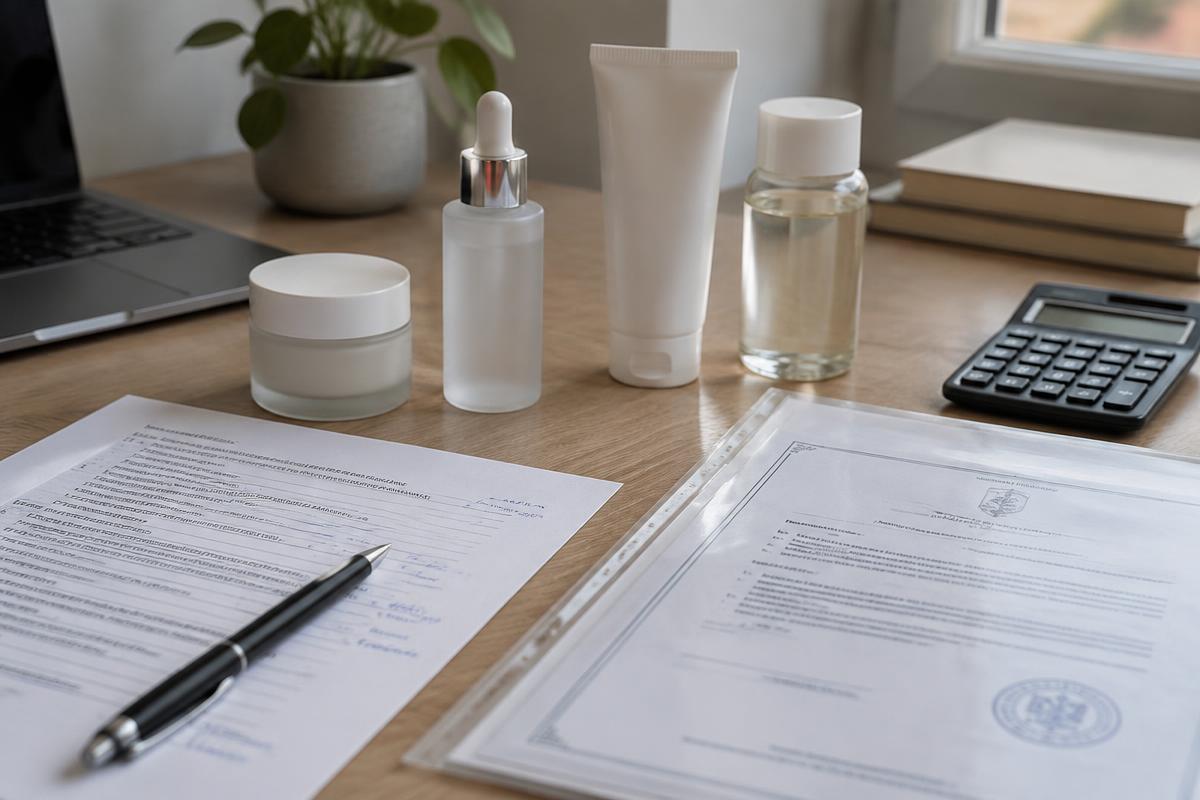
The Cosmetic Act B.E. 2558 (2015) uses a notification system. The manufacturer or importer must notify each product before producing or importing it, and may sell only after receiving the notification receipt. Receipts are time-limited and must be renewed before they lapse.
Notification looks simpler than registration, but responsibility rests fully on the notifier. Banned substances, ingredients above permitted limits, or drug-like claims such as treating acne can lead to cancellation and legal liability. We check every formula against the current Ministry of Public Health ingredient lists rather than relying on factory paperwork alone.
Medical devices: risk class sets the pathway
The Medical Device Act B.E. 2551 (2008), as amended in 2019, sorts devices into four risk classes and assigns a listing, detailed notification or licence pathway accordingly. Establishments register first; products follow. Higher-risk devices require technical files such as design data, safety testing, clinical evaluation and ISO 13485 evidence.
Some everyday products, including certain test kits, physiotherapy equipment and cosmetic contact lenses, can fall within the definition. Confirm the classification before shipping the first consignment.
Foreign brands: who holds the approval matters
Approvals are issued in the name of the Thai importer, not the overseas brand owner. If a distributor files and you later change distributors, the new importer must file again from scratch. Many brands therefore hold approvals through their own Thai company and appoint distributors separately. Companies with majority foreign shareholding should also check whether their trading activity needs a Foreign Business Licence.
- Certificate of Free Sale from the authority in the country of manufacture
- Importer appointment letter or power of attorney signed by an authorised officer
- Full formula and manufacturing process information
- Factory quality certificates such as GMP or ISO 13485, depending on the product
- Original label and draft Thai label
Legalising and translating overseas documents
Overseas documents filed with the Thai FDA are often requested with notarisation in the country of origin and legalisation by the Thai embassy or consulate there. Thailand acceded to the Apostille Convention on 30 June 2026 and the Convention enters into force for Thailand on 28 February 2027; until then, embassy legalisation remains the route, and after that date you should confirm the FDA's own practice before choosing a channel.
Documents not in English should be translated into Thai or English by a translator who signs a certification. Our translation and notary teams can prepare this as part of the same file.
How we work
- Group your products by Thai FDA category and flag items needing a classification check
- Review the factory or warehouse against the applicable criteria and list fixes before filing
- Screen formulas against published ingredient lists and review label and advertising claims
- Collect documents from the overseas manufacturer and arrange legalisation and translation
- File through the Thai FDA electronic system, respond to queries and hand over approvals with a renewal calendar
After approval: keeping products compliant
Getting the number is not the end of the work. The approval holder must make sure every batch matches what was filed. A change of formula, manufacturer, trade name or warehouse has to be filed as an amendment before it is used, not after. Advertising for some foods and medical devices needs approval of the wording before publication, and drug-like claims for food or cosmetics are among the issues most often flagged on online marketplaces.
We keep a calendar of every licence and notification receipt for our clients, with reminders well before expiry, so products on the shelf do not quietly become unregistered goods. When a distributor relationship ends, we also help plan the handover so that stock already in the market can be sold through lawfully while the new importer files its own approvals.
Mistakes we see most often
- Ordering a full container before confirming that the product category and every ingredient are permitted in Thailand
- Using the overseas label with a small Thai sticker that omits mandatory particulars
- Letting a distributor hold all approvals without a written agreement on what happens when the relationship ends
- Declaring a warehouse that cannot hold the product at the required temperature
- Copying marketing claims from the home market that are treated as medical claims in Thailand
Frequently asked questions
Can a foreigner apply in their own name?
The applicant must be an operator in Thailand. In practice this is usually a Thai company, and majority foreign-owned companies should check Foreign Business Act licensing at the same time.
Can a virtual office be the import premises?
Generally not for food or cosmetics, because import premises need storage the FDA can inspect. A virtual office can register the company, with a separate declared warehouse.
If we change importer, does the approval transfer?
No. Approvals are tied to the importer and premises, so a new importer must file its own. Decide early who will hold the approvals.
Do we need a Thai FDA number to sell on online marketplaces?
Most regulated food and cosmetic categories need a valid Thai FDA number or notification before they can be sold lawfully, and major marketplaces commonly ask for it before listing. Check the category first.
Can you check whether our product is a medical device?
Yes. We review the intended use and claims and, where the position is unclear, prepare a classification enquiry so you have a documented answer before importing.
How long does it take?
It depends on the category, premises readiness and the completeness of manufacturer documents. A compliant cosmetic notification is far quicker than a specifically controlled food or a high-risk device. We give a timeline after reviewing the first document set.
Official sources
Related services
Start by sending the basics
Tell us about your situation and what you need checked. We will reply with the documents and steps that apply to your case.
Contact the team