
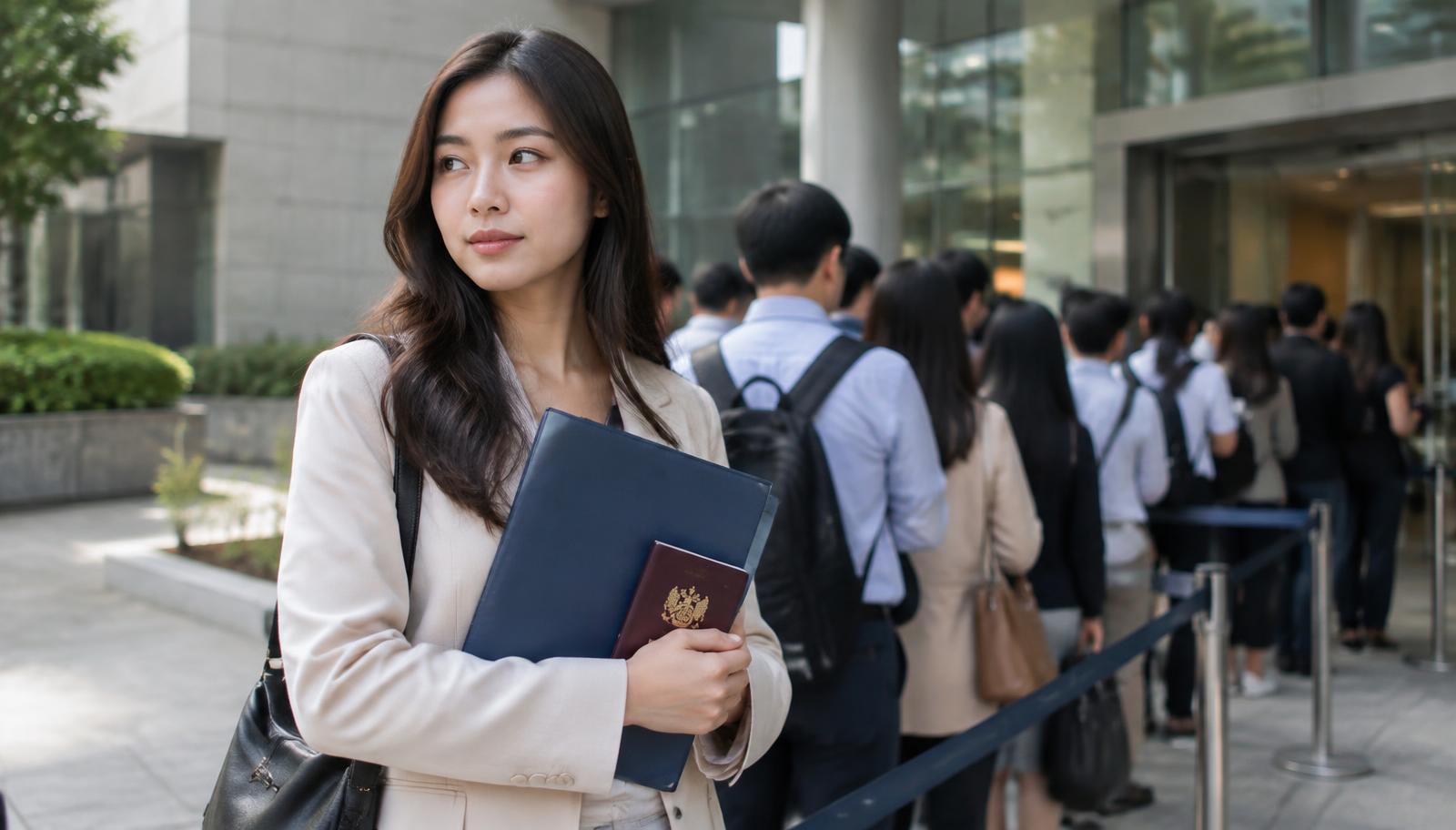
Thai citizens travelling to the United States for tourism, family visits, medical treatment or short business trips need a B1/B2 visa, because Thailand is not part of the Visa Waiver Program and ESTA cannot be used. Applicants complete the DS-160 online, pay the fee and attend an interview at the U.S. Embassy in Bangkok or the Consulate General in Chiang Mai. Under section 214(b), officers presume immigrant intent until the applicant credibly shows ties to Thailand.
Last reviewed: 2026-10-04 · General information only, not legal advice for your specific case
The core of the decision: section 214(b) and ties to Thailand
Section 214(b) of the Immigration and Nationality Act presumes every temporary visa applicant intends to immigrate. Applicants must show a residence in Thailand they do not intend to abandon, a clear and temporary purpose, and sufficient funds.
Ties officers consider usually include stable employment or a business, family in Thailand, property, current studies and a history of returning on time from international trips. No single factor secures a visa; the officer assesses each applicant as a whole.
Interviews often last only a few minutes. Officers decide mainly on the answers given and the DS-160, using documents only to confirm when they ask. Consistency between answers and the DS-160 matters more than the volume of paper.
Completing the DS-160 without contradictions
The DS-160 is read before the interview. Every field must be true and match your documents: employer, position, salary, address, travel history and family details. Corrections after submission require a new form.
Security and history questions, such as prior refusals, overstays or criminal matters, must be answered truthfully. Misrepresentation can lead to a permanent ineligibility under U.S. law, far more serious than a 214(b) refusal.
Applicants must list social media identifiers used during the period the form specifies; complete this accurately.
1. Complete the DS-160 online and keep the barcode confirmation page
2. Create an account in the embassy's appointment system and pay the fee
3. Book an interview in Bangkok or Chiang Mai
or check whether you qualify for interview waiver under current announcements
4. Attend with your passport, DS-160 confirmation and supporting documents
5. Track status and collect your passport through the chosen channel
Documents to bring to the interview
Only a few documents are mandatory, but applicants should bring evidence confirming their DS-160, organised so it can be produced immediately if requested.
- Current passport and previous passports with U.S. visas or travel history
- DS-160 confirmation page and appointment confirmation
- English employment letter, or company documents for business owners
- Financial and income evidence such as bank statements and tax documents
- Certificate of enrolment for current students
- Invitation letter or meeting agenda for business or family visits
- English translations of Thai documents
Visa validity and length of stay are different things
The validity on the visa is the period during which you may seek entry. The length of each stay is set by Customs and Border Protection at the port of entry and recorded in the I-94. Check your I-94 online after every entry.
Staying beyond the I-94 date, even by one day, automatically voids the visa, and longer overstays can trigger multi-year bars. Extensions must be filed with USCIS before the I-94 expires.
B1/B2 does not permit paid work from U.S. sources or study for credit; those require other visas such as F-1, J-1 or work visas.
Cases needing extra preparation: children, older applicants and relatives in the US
Applicants under 14 and older applicants within set ages may be eligible for interview waiver in some cases under embassy announcements, but must still submit a complete application. Children need birth certificates and parents' documents. Interview waiver policy changes often, so check current guidance.
Having relatives who are U.S. citizens or permanent residents does not bar a visitor visa, but applicants should be ready to explain their ties to Thailand clearly, especially if an immigrant petition has been filed for them, which must be disclosed.
Medical travellers should carry a letter from their Thai doctor, confirmation from the U.S. hospital and evidence of how treatment will be paid for.
After a 214(b) refusal
A 214(b) refusal is not a permanent bar. Applicants may reapply, ideally when circumstances have changed significantly, such as new stable employment, higher income or a clearer purpose. Reapplying immediately with nothing new usually produces the same result.
Refusals on other grounds, such as misrepresentation or prior overstay, have different legal consequences and may require a waiver; consult a U.S. immigration lawyer.
Keep a copy of every DS-160 you submit. Officers can see previous applications, and answers that change between applications without explanation weaken credibility.
Interview day: what actually happens and how to prepare
Arrive on time. Electronic devices and large bags are not allowed in the building under embassy security rules, so check the prohibited items list on the embassy website beforehand and keep documents in a clear folder that is easy to search.
The day usually involves a document check, fingerprinting and the interview at a consular officer's window. Interviews may be conducted in English or Thai; answer in the language you communicate in most clearly. There is no advantage in using English if you are not comfortable with it.
Common questions are why you are going, for how long, who is paying, what you do for work and who you know in the United States. Answers should be short, direct and consistent with the DS-160. Memorised answers that sound unnatural, or handing over documents the officer did not ask for, rarely help.
Some applicants receive a section 221(g) notice requesting more documents or administrative processing. This is not a final refusal; follow the instructions on the notice and wait for the outcome, as processing time varies by case.
Once the visa is issued, check the name, date of birth, passport number, visa type and number of entries. Contact the embassy immediately about any error before travelling.
Applicants travelling with family members who have separate appointments should make sure each person's DS-160 describes the same trip, dates and sponsor. Officers often interview family members together and notice when the forms describe different plans.
Business travel on a B1 visa
B1 covers activities such as attending meetings, conferences and trade shows, negotiating contracts, consulting with business associates and settling an estate. It does not permit productive work for a U.S. company or receiving a salary from a U.S. source.
Business applicants should bring a letter from their Thai employer explaining the purpose and confirming continued employment and salary, plus an invitation or agenda from the U.S. counterpart. Owners should bring company registration and evidence of the business relationship.
Installation, servicing or training under a sales contract can fall within B1 in specific circumstances; check the Department of State guidance before applying.
Translations and documents at the interview
US consular interviews are short, and officers decide mainly on the DS-160 and the applicant's answers. Even so, an officer may ask to see a document, and a Thai-only house registration, marriage certificate or company affidavit cannot be read quickly. Prepare clear English translations of the key Thai documents, with the translator's name and date, and keep each translation clipped behind its original.
Organise the file by topic, such as identity, employment, finances and family, so you can hand over the right page within seconds. Do not volunteer a stack of papers; answer the question first and offer a document only when it directly supports the answer.
Our role
We check the consistency of your draft DS-160 against your documents, translate Thai documents into English, organise the file for easy use at the interview, and provide signature or true-copy certification by a Notarial Services Attorney for documents to be used in the US.
We never coach untrue answers and cannot promise outcomes. Visas are decided by U.S. consular officers and admission by CBP.
Frequently asked questions
Do I need to translate Thai documents for a US visa interview?
The consular officer may ask about any document you bring. Bring English translations of key Thai documents such as house registration, marriage or birth certificates and business registration, so the officer can read them quickly during the short interview.
Should I bring my whole document file to the interview?
Bring organised originals and translations, but expect the officer to rely mainly on your answers and the DS-160. Offer a document only when asked or when it directly answers a question.
Can Thais use ESTA for the US?
No. Thailand is not in the Visa Waiver Program; Thais need a B1/B2 visa for short visits.
Where are US visa interviews held?
At the U.S. Embassy in Bangkok or the U.S. Consulate General in Chiang Mai, as booked in the appointment system.
Does a 10-year visa allow a 10-year stay?
No. Validity is the period for seeking entry; each stay is set in the I-94 by CBP.
When can I reapply after a 214(b) refusal?
There is no legal waiting period, but reapply when your circumstances or evidence have changed significantly.
Should Thai documents be translated?
Yes, attach English translations so the officer can read them immediately if requested.
Official sources
Related services
Have your DS-160 draft and documents checked before the interview
Send your draft and documents; we will flag inconsistencies and translate what you should bring.
Contact the team