Act on Establishment of Administrative Courts and Administrative Court Procedure B.E. 2542 (1999)
Defines administrative cases, the courts’ jurisdiction and filing deadlines that are generally shorter than in civil cases.
Northern Thailand — Chiang Mai
Challenging unfair administrative decisions through the correct procedure and deadlines.
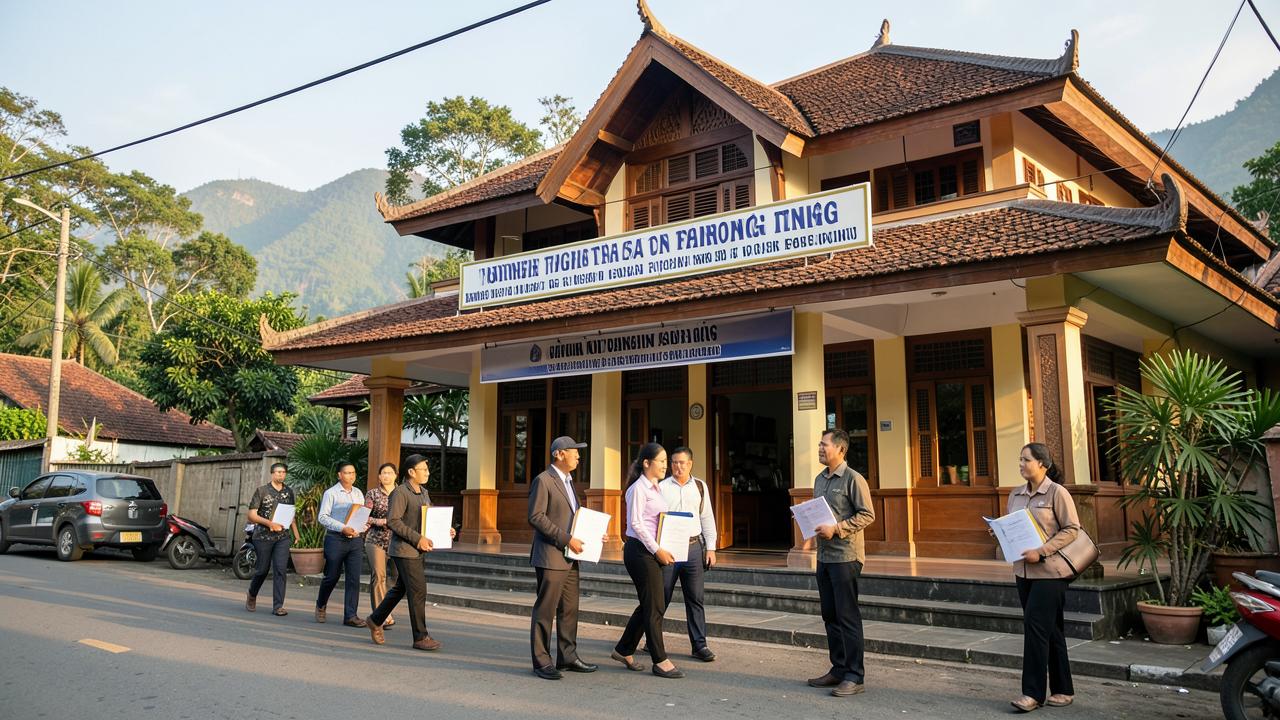
Chiang Mai is the administrative, academic and tourism hub of northern Thailand and home to a large long-stay foreign community. Legal work here spans local business and land matters as well as documents, visas, marriage and succession for long-term foreign residents. Because regional courts and agencies are located in the province, many matters can be completed locally without travelling to Bangkok.
When a state agency issues a decision affecting your rights — refusing renewal, revoking a permit, imposing an administrative fine or rejecting an application — you may appeal internally and file with the Administrative Court within strict deadlines. We assess the legality of the decision, prepare the appeal, the complaint and any stay application, and act through to the Supreme Administrative Court.
Jurisdiction and filing requirements should be confirmed for each matter, because practice and required attachments differ between offices.
| Court / authority | What it handles |
|---|---|
| Chiang Mai Provincial Court and Chiang Mai Municipal Court | Civil and criminal cases within Chiang Mai province |
| Chiang Mai Juvenile and Family Court | Divorce, custody and family matters |
| Labour Court Region 5 | Labour cases in the upper northern region |
| Chiang Mai Administrative Court | Challenges to state decisions in the northern region |
| Chiang Mai Legal Execution Office | Seizure, garnishment and auction of local assets |
| Chiang Mai Provincial Land Office and branch offices | Registration of land and condominium transactions |
| Chiang Mai Immigration Office | 90-day reporting, extensions of stay and residence notification |
| Chiang Mai Provincial Commercial Office | Local business registration services |
Internal appeals follow the timeframe in the governing statute; Administrative Court cases typically run longer than ordinary civil litigation because the court conducts its own fact-finding.
Timeframes are indicative and depend on the court calendar and the authority handling the matter in Chiang Mai.
Summarised for general understanding only. The application of each provision depends on the facts of your case.
Defines administrative cases, the courts’ jurisdiction and filing deadlines that are generally shorter than in civil cases.
Administrative orders must state reasons and inform the right of appeal; failure to do so can extend the appeal period.
Used to obtain the agency file so the reasoning behind an order can be examined before challenging it.
Sets out state and official liability and the route to claim compensation.
These are constructed examples used to explain procedure. They are not client matters, and no outcome is implied or guaranteed.
Situation: A business receives a revocation notice without having been given a chance to respond.
Usual approach: First examine procedural legality — right to be heard, stated reasons, and the issuer’s authority — then consider the internal appeal plus a stay request alongside the court filing. (Hypothetical.)
Situation: A bidder is disqualified on technical grounds it believes are wrong.
Usual approach: Request the evaluation records and object through the procurement rules immediately — the deadlines are short and affect later court rights.

Most matters can be handled locally: Chiang Mai has provincial, municipal, family, regional labour and administrative courts as well as a legal execution office. Exceptions are matters the law assigns to central bodies, such as MFA document legalisation.
Yes. The document must follow the correct Thai statutory form, and if it will also be used abroad, translation and certification should be planned from the outset to avoid redoing it.
Check the title type, legal access, zoning and use restrictions, and any registered encumbrances before paying a deposit — these are hard to fix after signing.
Check the notification for the stated appeal right and deadline, file the internal appeal in time, and if the result is still unfair, proceed to the Administrative Court.
Yes, where they are affected by a Thai state decision. Proceedings are in Thai and foreign documents need certified translations.
Many administrative cases are fee-free, except claims for money or delivery of property, which are charged on the amount claimed.
Tell us the facts and we will explain which authority applies, what documents are needed and the realistic timeframe.