Investment Promotion Act B.E. 2520 (1977), as amended
Empowers the Board of Investment to grant tax incentives and conditional land-holding rights.

Practice area
Structuring foreign investment in Thailand correctly from day one.

Foreign nationals doing business in Thailand fall under the Foreign Business Act B.E. 2542 (1999), which reserves activities across three annexed lists. We assess which list your planned activity falls into, whether it needs a Foreign Business Licence, a treaty-based certificate, or qualifies for Board of Investment (BOI) promotion, and then prepare the application, supporting documents and responses to the officers reviewing the file.
Company registration usually takes a few working days once documents are complete, while Foreign Business Licence and BOI promotion applications take from several weeks to several months depending on the activity and the completeness of the file.
Timeframes are indicative only and depend on the authority, the court calendar and the completeness of your documents.
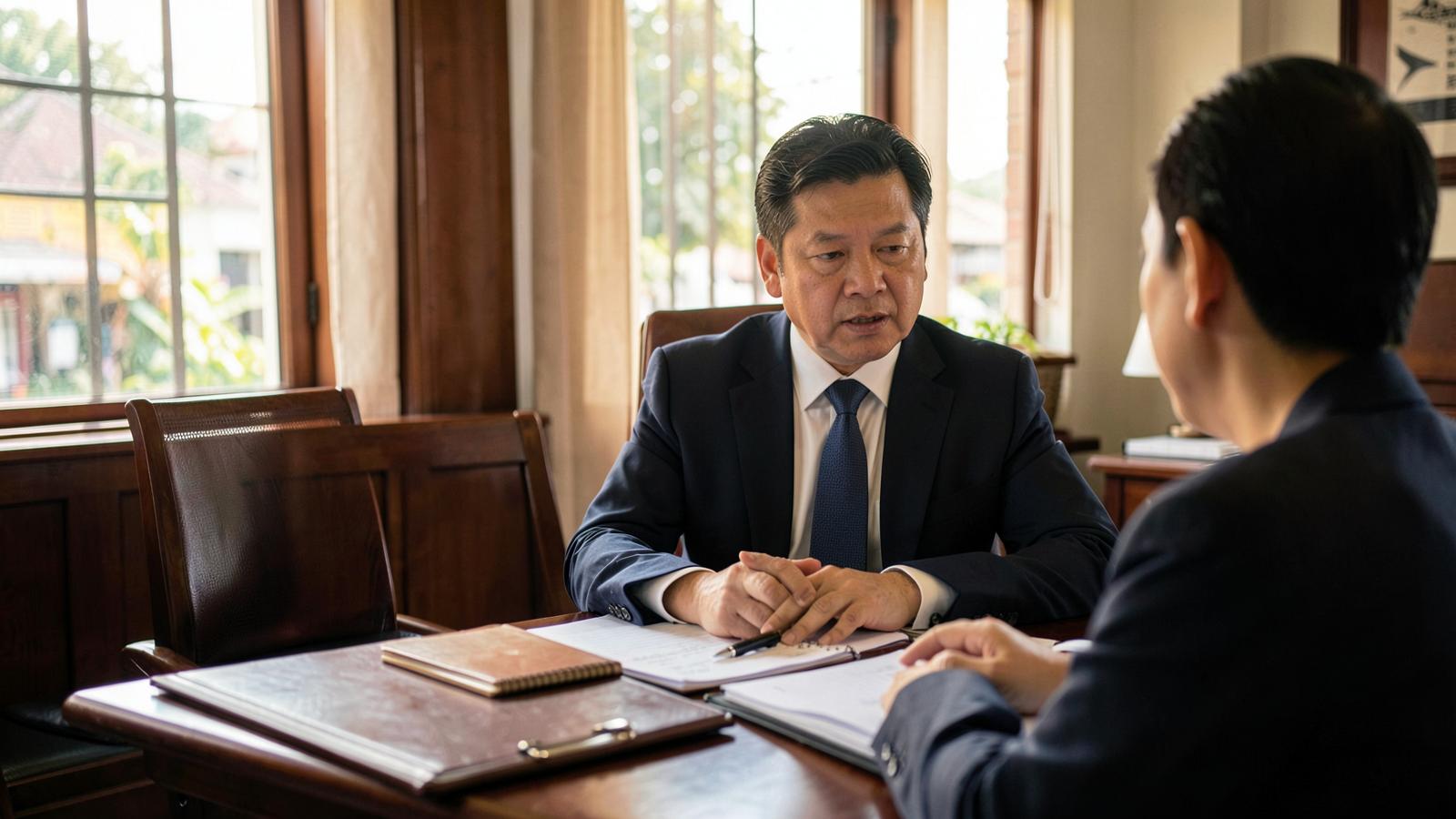
The most common mistake foreign investors make is choosing a structure before defining the activity precisely. Thai law looks at what the business actually does, not at the objectives written in the registration. A company described as "consulting" that in practice sells goods and issues tax invoices will be assessed on the real activity. We therefore map your operation step by step — who buys, where payment lands, who delivers the service and how many foreign staff are involved — before concluding which list the activity sits on.
Once that is settled we set out every viable route side by side: a Thai-majority company, a Foreign Business Licence, BOI promotion, or a representative office limited to support activities. Each differs in time cost, employment conditions, reporting burden and room to expand later. The decision should be made against a three to five year plan, not simply on what is quickest to open.
Holding shares through Thai nominees to sidestep ownership limits is unlawful, and in practice authorities can test it retrospectively from several angles: the source of the Thai shareholder’s funds, the absence of income or assets to support the investment, no participation in shareholder meetings, or agreements handing full control to the foreign party. The consequences are not limited to fines — they extend to orders to cease operations and knock-on effects on executives’ work permits.
Our recommendation is a structure that can be explained at every layer: a Thai shareholder with a genuine commercial reason, a traceable source of funds and a real role. Where the business model does not support that, applying for a licence or BOI promotion is safer than relying on a fragile arrangement. We prepare a written risk memorandum for the client’s records and revisit it whenever activities or shareholders change.
Foreign business set-ups more often stall on paperwork than on law. Parent-company certificates, powers of attorney and overseas financial statements must be translated, have signatures certified and be authenticated before they can be used in Thailand. In the other direction, Thai documents sent to a parent company or foreign bank must pass through the Department of Consular Affairs and the receiving embassy. Because our certification work sits inside the same firm, we can sequence it around the filing deadlines.
For longer-term planning, note that Thailand has acceded to the Apostille Convention, which enters into force for Thailand on 28 February 2027. Before that date the traditional legalisation chain still applies, so transactions spanning the change should plan for both routes.
Summarised for general understanding only. The application of each provision depends on the facts of your case.
Empowers the Board of Investment to grant tax incentives and conditional land-holding rights.
Lists restricted or licensable businesses and defines "foreigner" by shareholding.
Regulates foreign employment and work permits, which must match the business activity.
These are constructed examples used to explain procedure. They are not client matters, and no outcome is implied or guaranteed.
Situation: A company is promoted for one activity but earns mainly from another.
Usual approach: Review the approved scope and conditions, then consider amending the project or separating entities — operating outside scope affects both incentives and staff visa status. (Hypothetical.)
Province pages set out the courts and authorities with jurisdiction locally, and answer the questions people in that area ask.
Sometimes. Full foreign ownership is possible where the activity is not on a reserved list, where a Foreign Business Licence is granted, under BOI promotion, or under a treaty. It must be assessed activity by activity.
BOI promotion grants investment privileges such as foreign ownership and easier expatriate employment, while a Foreign Business Licence is a case-by-case permission to operate an activity otherwise reserved for Thai nationals.
It depends on the structure and licence used. Statutory minimum capital for foreign business activities and the employment conditions attached to work permits differ; we confirm the figures applying to your case after reviewing the documents.
They normally need a certified translation plus notarisation in the country of origin, followed by embassy or competent-authority certification. Thailand still uses consular legalisation until the Apostille Convention takes effect on 28 February 2027.
Tell us the facts and we will explain the options, the documents required and the realistic timeframe before you decide.