Arbitration Act B.E. 2545 (2002)
Recognises arbitration agreements and enforcement of awards, including foreign awards.
Northern Thailand — Chiang Rai
Resolving disputes outside court and making awards effective
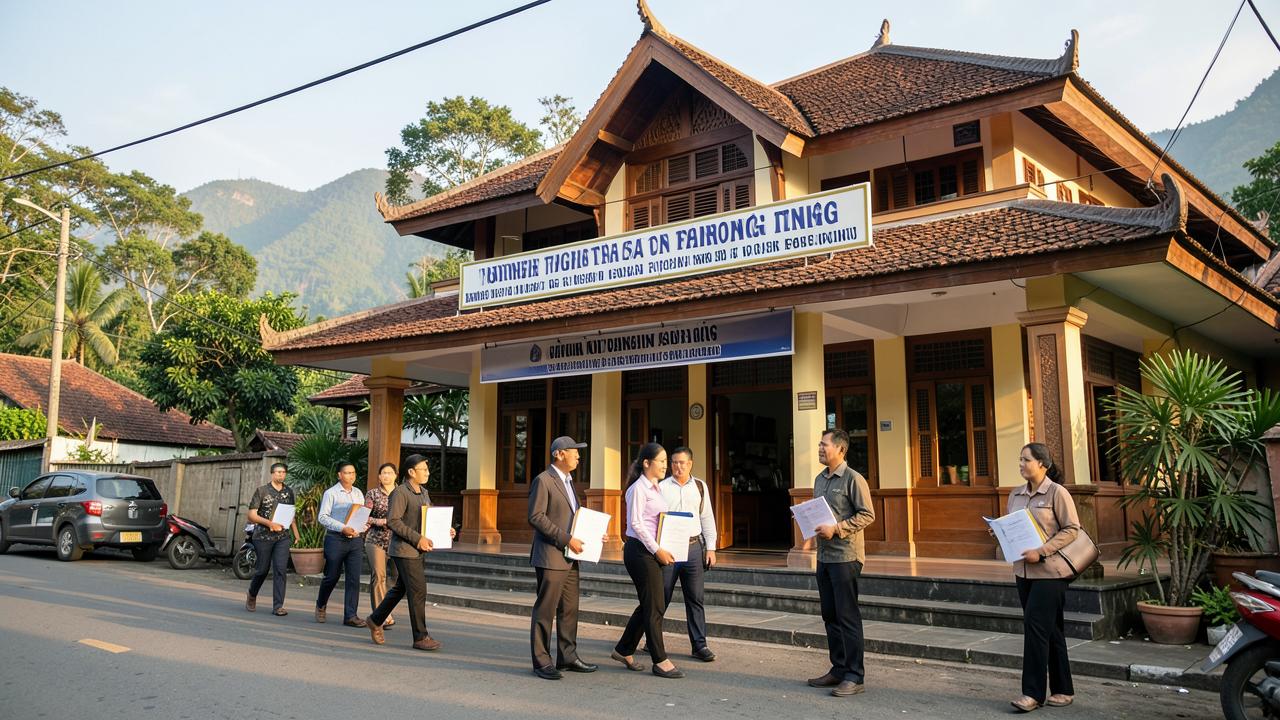
Chiang Rai borders both Myanmar and Lao PDR and combines border trade, highland agriculture, tourism and a growing foreign-resident community. Legal work includes cross-border trade and transport contracts, land disputes in use-restricted areas, and civil-status matters for people with incomplete registry records, which require careful historical document review.
Faster, lower-cost routes out of a dispute — negotiation, mediation and arbitration — plus enforcement of judgments and awards, including asset tracing before you commit to litigation.
Jurisdiction and filing requirements should be confirmed for each matter, because practice and required attachments differ between offices.
| Court / authority | What it handles |
|---|---|
| Chiang Rai Provincial Court and Chiang Rai Municipal Court | Civil and criminal cases within the province |
| Chiang Rai Juvenile and Family Court | Family, juvenile and minors’ status matters |
| Labour Court Region 5 | Labour cases in the upper north |
| Chiang Rai Provincial Land Office and branch offices | Land registration and verification of title types |
| Chiang Rai Immigration Office | Foreign-national matters, extensions of stay and border checkpoint work |
| Chiang Rai Legal Execution Office | Enforcement of judgments in the province |
| District offices in Chiang Rai (civil registration) | Civil registration, marriage registration and correction of registry entries |
| Chiang Rai Provincial Commercial Office | Local company registration services |
Cooperative mediation often concludes within weeks; enforcement timing depends on the asset type and the Legal Execution Department process.
Timeframes are indicative and depend on the court calendar and the authority handling the matter in Chiang Rai.
Summarised for general understanding only. The application of each provision depends on the facts of your case.
Recognises arbitration agreements and enforcement of awards, including foreign awards.
Gives statutory mediation settlements binding effect, saving time and cost versus litigation.
Provides for court-annexed mediation and consent judgments.
These are constructed examples used to explain procedure. They are not client matters, and no outcome is implied or guaranteed.
Situation: Despite an arbitration clause, the counterparty files in court.
Usual approach: Raise the arbitration agreement within the statutory window or risk waiver, while weighing the cost of both routes. (Hypothetical.)

Whichever the contract designates. Without a clause, it becomes a question of interpreting the parties’ intent — slow and uncertain. The fix is a clause naming the governing version and treating the other as a convenience translation.
Verify whether the title type is transferable, whether the plot lies in a use-restricted zone, how actual boundaries compare with the cadastral map, and whether access is a legal right or merely permitted by consent — these affect both building and resale.
Yes, through the registrar’s procedure, supported by historical evidence and sometimes witnesses. Where evidence is insufficient, a court order confirming the facts may be needed first, so all older documents should be gathered before starting.
Thailand is a party to the New York Convention, so foreign awards can be enforced through the Thai courts, subject to the statutory conditions and exceptions.
Yes, provided you have not signed a settlement that extinguishes the claim — always have the draft reviewed first.
Tell us the facts and we will explain which authority applies, what documents are needed and the realistic timeframe.