Immigration Act B.E. 2522 (1979), as amended
Governs visa categories, extensions of stay, residence notification and grounds of inadmissibility.
Southern Thailand — Surat Thani
Visas, work permits, residency and lawful status
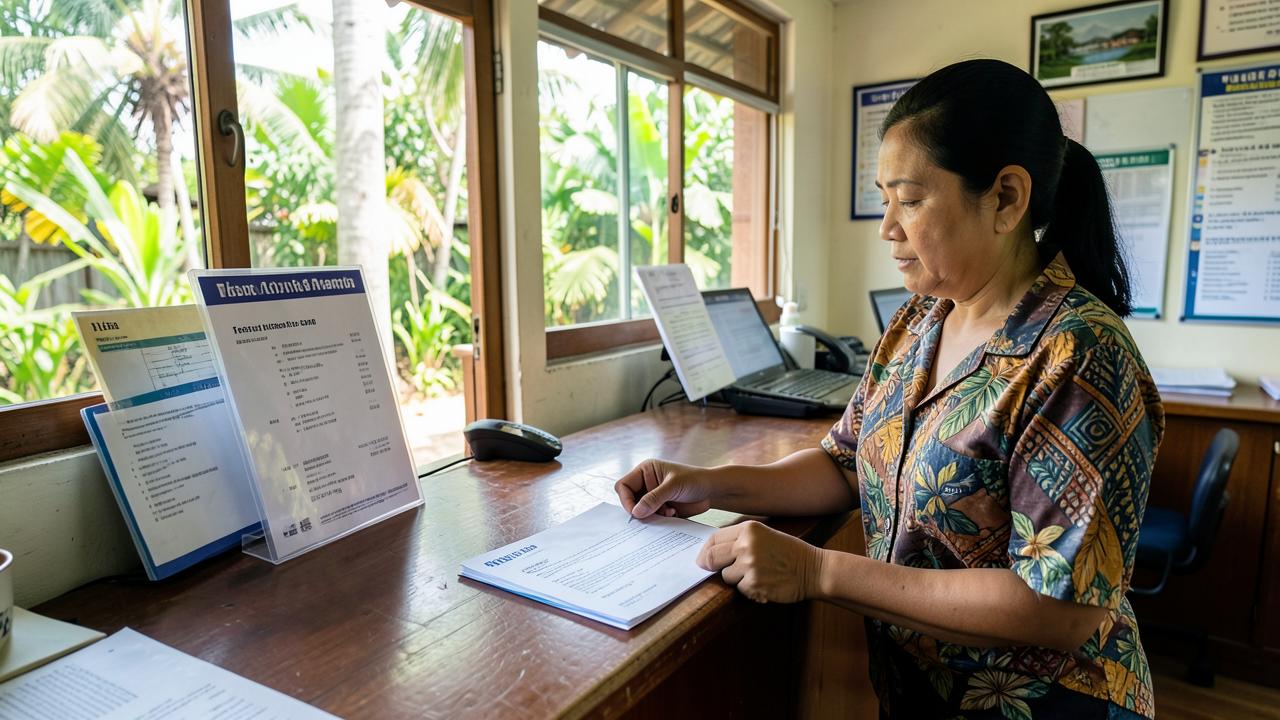
Surat Thani contains two distinct settings: a mainland centre for agriculture and commerce, and the islands of Samui, Phangan and Tao where tourism and foreign investment drive the economy. Legal work differs accordingly, from crop-sale and agricultural land contracts to hotel leases, condominium transactions and documentation for foreign residents on the islands.
Legal advice and filings on the status of foreign nationals in Thailand — visa categories, extensions, work permits, 90-day reporting, and difficult cases such as overstay, refusal and appeals.
Jurisdiction and filing requirements should be confirmed for each matter, because practice and required attachments differ between offices.
| Court / authority | What it handles |
|---|---|
| Surat Thani Provincial Court, Koh Samui Provincial Court and Surat Thani Municipal Court | Civil and criminal cases by jurisdiction, with the islands served by their own provincial court |
| Surat Thani Juvenile and Family Court | Family and juvenile matters |
| Labour Court Region 8 | Labour cases in the upper southern region |
| Surat Thani Provincial Land Office and branch offices, including the Koh Samui branch | Land, condominium and lease registration on the mainland and islands |
| Surat Thani Immigration Office and Koh Samui immigration checkpoint | Extensions of stay and residence notification for foreign nationals |
| Surat Thani Legal Execution Office | Enforcement of judgments in the province |
| Surat Thani Provincial Commercial Office | Local company registration services |
Extensions are usually decided within weeks; permanent residence and naturalisation take years.
Timeframes are indicative and depend on the court calendar and the authority handling the matter in Surat Thani.
Summarised for general understanding only. The application of each provision depends on the facts of your case.
Governs visa categories, extensions of stay, residence notification and grounds of inadmissibility.
Governs work permits and permissible occupations for foreigners.
Sets the criteria for Thai nationality and related permanent-residence considerations.
These are constructed examples used to explain procedure. They are not client matters, and no outcome is implied or guaranteed.
Situation: The applicant meets the amount but not the required seasoning period.
Usual approach: Verify seasoning rules and evidence format before the filing date and allow time for bank letters; document practice varies between immigration offices. (Hypothetical.)
Not necessarily — Koh Samui Provincial Court has its own jurisdiction. Venue follows the defendant’s domicile and where the cause of action arose; if both are on the island, the case can be filed there directly.
Check whether the lease is registered, the remaining term, whether the leasehold can be assigned to the buyer, renewal conditions, and the accommodation licence, which attaches to both the building and the operator. If the leasehold cannot be assigned, the agreed price may not reflect what the buyer actually receives.
Yes, but the document must be designed to the receiving authority’s requirements from the outset — language, form of signature certification and the order of certification — because corrections usually mean restarting the whole process, which costs more time on an island.
No. Working in Thailand requires a valid work permit, which is separate from the visa.
They generally need authentication in the issuing country, translation into Thai or English, and legalisation of the translation at the Department of Consular Affairs.
Thailand acceded to the Apostille Convention on 30 June 2026, entering into force on 28 February 2027. Until then, consular and embassy legalisation remains the route.
Tell us the facts and we will explain which authority applies, what documents are needed and the realistic timeframe.