Civil and Commercial Code
Section 193/30 sets a general 10-year prescription, but many claims (wages, goods sold) run much shorter — prescription is checked first.
Eastern Thailand — Chonburi
Civil, criminal, labour, family, succession and land disputes
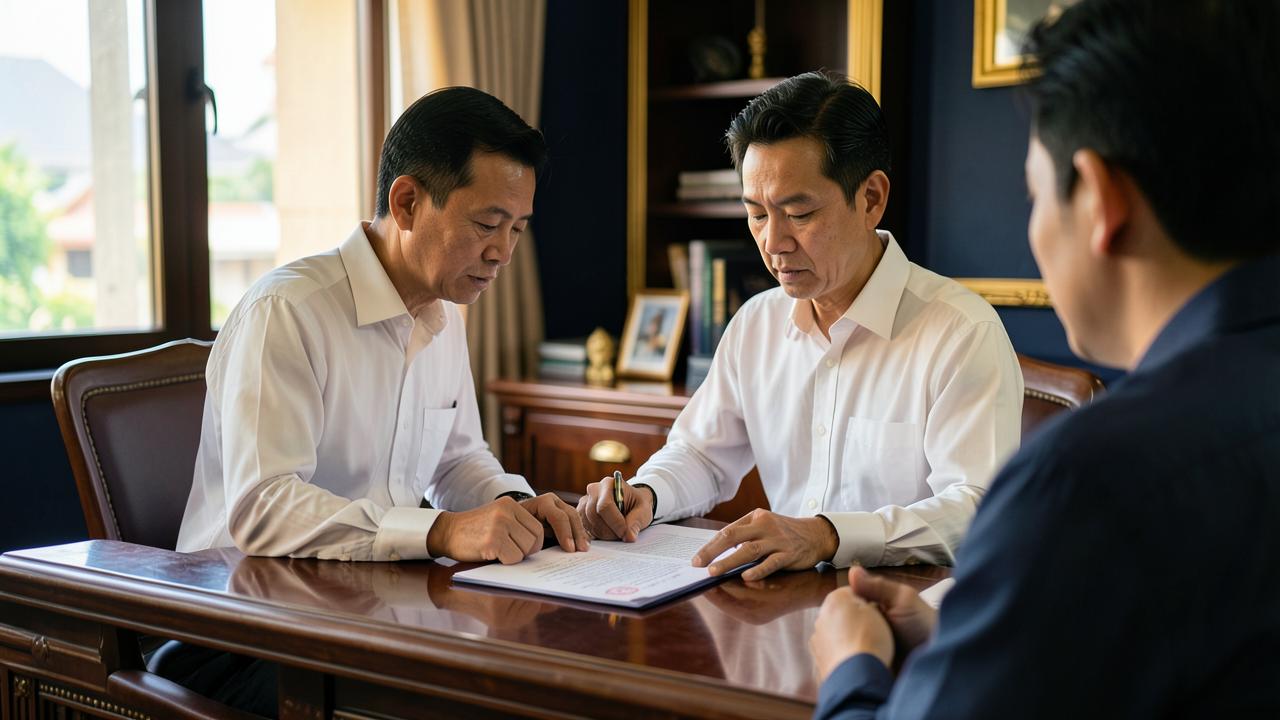
Chonburi holds three economies in one province: industry around Laem Chabang and Sriracha, tourism and foreign residence in Pattaya, and commerce in the provincial city. Legal work here ranges from factory labour disputes and subcontracting agreements to promoted-investment structures, real-estate work and family matters for foreign residents.
Our attorneys represent clients before Thai courts nationwide — from case assessment and evidence gathering, to filing a complaint or defence, trial, appeal, Supreme Court petition and enforcement of judgment. We explain every realistic option before you commit to a course of action.
Jurisdiction and filing requirements should be confirmed for each matter, because practice and required attachments differ between offices.
| Court / authority | What it handles |
|---|---|
| Chonburi Provincial Court, Pattaya Provincial Court and Chonburi Municipal Court | Civil and criminal cases by territorial jurisdiction in the province |
| Chonburi Juvenile and Family Court | Family and juvenile matters |
| Labour Court Region 2 | Labour cases across the eastern region, driven by the industrial base |
| Chonburi Provincial Labour Protection and Welfare Office | Receives complaints and mediates labour disputes before litigation |
| Chonburi Provincial Land Office and branch offices | Land, condominium and lease registration |
| Chonburi Immigration Office | Extensions of stay and foreign-national matters for Pattaya and Sriracha |
| Chonburi Legal Execution Office | Enforcement of judgments in the province |
| Chonburi Provincial Commercial Office | Local company registration services |
A first-instance civil case typically runs from several months to a few years, depending on complexity, witnesses and the court calendar.
Timeframes are indicative and depend on the court calendar and the authority handling the matter in Chonburi.
Summarised for general understanding only. The application of each provision depends on the facts of your case.
Section 193/30 sets a general 10-year prescription, but many claims (wages, goods sold) run much shorter — prescription is checked first.
Section 420 governs tort liability; Section 448 requires suit within one year of knowing both the wrongful act and the person liable.
Sets jurisdiction, pleadings, evidence and a one-month appeal deadline from the reading of the judgment (extendable by leave).
Governs suspects’ and defendants’ rights, filing a police complaint, private prosecution and bail applications.
These are constructed examples used to explain procedure. They are not client matters, and no outcome is implied or guaranteed.
Situation: A client accepts delivery but withholds the final payment, alleging defects that were never raised in writing.
Usual approach: The usual route: review the contract and delivery records, issue a formal demand with a deadline, then sue for the fee plus default interest, with acceptance evidence prepared from the outset. (Hypothetical, for procedure only.)
Situation: A summons arrives over a debt that arose years earlier, and it is unclear whether the claim has expired.
Usual approach: Prescription must be pleaded in the defence — the court will not raise it for you. File the defence in time and check for interrupting events such as debt acknowledgement or part payment.

Start by keeping the termination letter, recent payslips and time records. You may then either file with the labour inspector or sue directly in Labour Court Region 2. The first route has no filing fee and is often faster; the second reaches a wider range of damages, so the choice follows the nature of the claim.
Check the building’s remaining foreign quota, the debt-free certificate for common-area fees, registered encumbrances on the unit title, and the status of the condominium juristic person — outstanding fees block transfer registration even though the buyer did not incur them.
Focus on defect liability, staged delivery, retention-money terms and joint liability under labour protection law — a principal can in some circumstances be jointly liable for the wages of a subcontractor’s employees.
Initial consultations can be by phone or online, but appointing us to act requires signing the court-prescribed attorney appointment form.
Generally the court where the defendant is domiciled or where the cause of action arose. Labour, family, tax and IP matters have specialised courts.
Mediation is often faster and cheaper, but only where the other side can actually pay. We assess this before recommending it.
Tell us the facts and we will explain which authority applies, what documents are needed and the realistic timeframe.