Land Code
Governs title documents, registration of rights and foreign land-holding restrictions.

Northeastern Thailand — Khon Kaen
Title due diligence, sale, lease and transfer at the Land Office
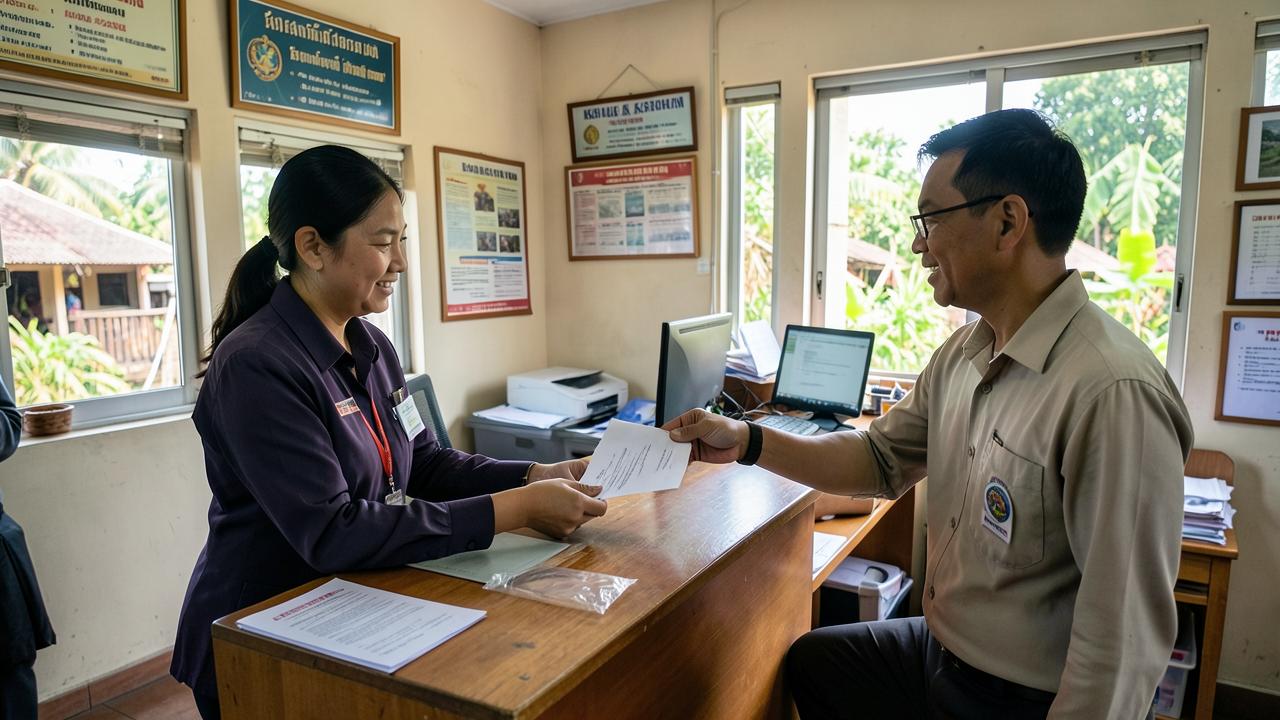
Khon Kaen is the administrative, academic and medical hub of northeastern Thailand and hosts several regional-level agencies, so many cases and registrations can be completed locally rather than in Bangkok. Common work includes debt and enforcement matters, inherited-land disputes within extended families, and documents for residents whose spouse or children live abroad.
End-to-end property legal work: title and encumbrance checks, drafting sale or lease agreements, attending the Land Office for transfer, and lawfully structuring foreign ownership.
Jurisdiction and filing requirements should be confirmed for each matter, because practice and required attachments differ between offices.
| Court / authority | What it handles |
|---|---|
| Khon Kaen Provincial Court and Khon Kaen Municipal Court | Civil and criminal cases within the province |
| Khon Kaen Juvenile and Family Court | Family matters, succession involving minors and juvenile cases |
| Labour Court Region 4 | Labour cases across the central northeast |
| Khon Kaen Administrative Court | Challenges to state decisions across the northeast |
| Khon Kaen Legal Execution Office | Seizure, garnishment, auction and execution-stage mediation |
| Khon Kaen Provincial Land Office and branch offices | Land registration, including subdivision of titles |
| Khon Kaen Provincial Commercial Office | Local company registration services |
| Khon Kaen Immigration Office | Extensions of stay and residence notification for foreign nationals |
Title due diligence usually takes a few business days; the Land Office transfer is generally completed in a single day when documents are complete.
Timeframes are indicative and depend on the court calendar and the authority handling the matter in Khon Kaen.
Summarised for general understanding only. The application of each provision depends on the facts of your case.
Governs title documents, registration of rights and foreign land-holding restrictions.
Covers sale, lease, hire-purchase, servitude, usufruct and mortgage.
Sets the foreign ownership quota in condominiums and the duties of the juristic person.
These are constructed examples used to explain procedure. They are not client matters, and no outcome is implied or guaranteed.
Situation: A buyer finds access crosses a neighbouring plot with no registered servitude.
Usual approach: Check the cadastral map and land office records before any deposit, and make registering a servitude a condition precedent. (Hypothetical.)

First check whether the land is still in the deceased’s name and whether an estate administrator has been appointed. If not, petition for an administrator, then divide by shares or apply to subdivide the title. If agreement is still impossible, a partition action follows, and the court may order sale and division of the proceeds.
Yes. Enforcement runs through the legal execution office where the asset is located, based on the writ issued by the court that gave judgment. The slowest step is usually not distance but tracing assets that are not already mortgaged or transferred away.
Yes, if drafted to match the receiving authority’s requirements, which usually means signature certification, translation into that country’s official language and certification in sequence. For Thailand, the Apostille Convention enters into force on 28 February 2027; until then MFA and embassy legalisation continues to apply.
Yes, within the building’s foreign quota and with the required evidence of inbound foreign currency.
You may appoint us by power of attorney on the Land Department form, properly certified — and legalised if executed abroad.
Tell us the facts and we will explain which authority applies, what documents are needed and the realistic timeframe.