Condominium Act B.E. 2522 (1979), as amended
Caps aggregate foreign-owned area in a condominium building and requires evidence of funds remitted from abroad.

Central Thailand — Bangkok
Checking title, documents and transfer before a major payment is made.
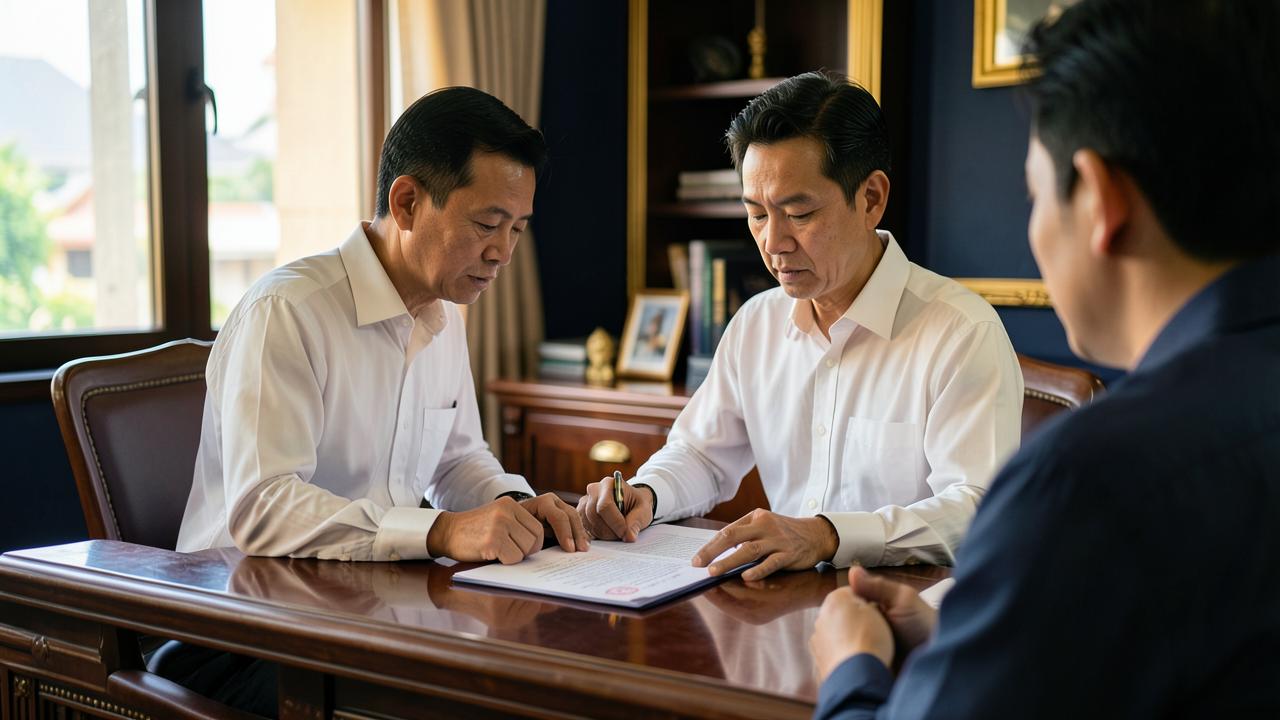
Bangkok concentrates the courts, central government departments, embassies and most corporate head offices in Thailand. A legal matter arising in Bangkok therefore usually touches several authorities at once — the court with territorial jurisdiction, the Department of Business Development, the district land offices, the Immigration Bureau and the Department of Consular Affairs. Sequencing the steps correctly from the start saves far more time than correcting them later.
Foreign nationals may own condominium units in Thailand under the Condominium Act, provided foreign ownership in the building does not exceed 49% of the total unit floor area and the funds are evidenced as foreign currency remitted into Thailand as the law requires. We verify the foreign quota, the title status, encumbrances and the sale and purchase agreement, and handle the transfer at the Land Office.
Jurisdiction and filing requirements should be confirmed for each matter, because practice and required attachments differ between offices.
| Court / authority | What it handles |
|---|---|
| Civil Court, Criminal Court and Bangkok municipal courts | Hear civil and criminal cases according to territorial jurisdiction in Bangkok |
| Central Labour Court | Dismissal, severance and employment-contract disputes |
| Central Administrative Court | Challenges to state orders and administrative action |
| Central Intellectual Property and International Trade Court | Trademark, copyright, patent and international trade cases |
| Central Bankruptcy Court | Bankruptcy and business rehabilitation |
| Legal Execution Department | Seizure, garnishment, auction and execution-stage mediation |
| Department of Business Development | Company registration and registered changes |
| Department of Consular Affairs, MFA | Legalisation of documents for overseas use |
| Immigration Bureau | Visas, extensions of stay and residence notification |
Title and quota due diligence usually takes a few working days once documents are received, while the transfer date depends on the Land Office schedule and every party’s documents being ready.
Timeframes are indicative and depend on the court calendar and the authority handling the matter in Bangkok.
Summarised for general understanding only. The application of each provision depends on the facts of your case.
Caps aggregate foreign-owned area in a condominium building and requires evidence of funds remitted from abroad.
Specify transfer-day documents, including the foreign-quota certificate from the condominium juristic person.
These are constructed examples used to explain procedure. They are not client matters, and no outcome is implied or guaranteed.
Situation: A foreign buyer has paid a deposit, then learns the building’s foreign quota is full.
Usual approach: Obtain the quota certificate before paying a deposit, and state in the sale agreement that the buyer may terminate and reclaim the deposit if the foreign quota is unavailable. (Hypothetical.)
It depends on the case type and territorial jurisdiction. General civil and criminal cases go to separate courts, while labour, administrative, IP and bankruptcy matters each have a specialised court. We verify jurisdiction from the parties’ domicile and the place of the events before filing.
Not every hearing. With a proper appointment of counsel and power of attorney, your lawyer can act for you in many steps, but hearings where you must testify require your attendance. We tell you in advance which dates are mandatory.
Always start from the receiving authority’s requirement — it dictates whether you need signature certification, translation, MFA legalisation and embassy endorsement, and in what order. For Thailand, the Apostille Convention enters into force on 28 February 2027; until then MFA and embassy legalisation continues to apply.
As a rule foreigners cannot own land. Common alternatives are owning the building while taking a long lease of the land, or using a usufruct or superficies right — each with different limitations.
Not necessarily; a power of attorney can be used. A power of attorney executed abroad normally needs signature certification and embassy or competent-authority authentication before it can be used in Thailand.
It is a matter of contract. Parties commonly split the costs or allocate them to one side, so the allocation should be stated clearly before signing.
Tell us the facts and we will explain which authority applies, what documents are needed and the realistic timeframe.