Civil and Commercial Code
Book III governs company formation, directors’ powers, shareholder meetings and share transfers.

Central Thailand — Nonthaburi
Incorporation, contracts, foreign business, BOI and compliance
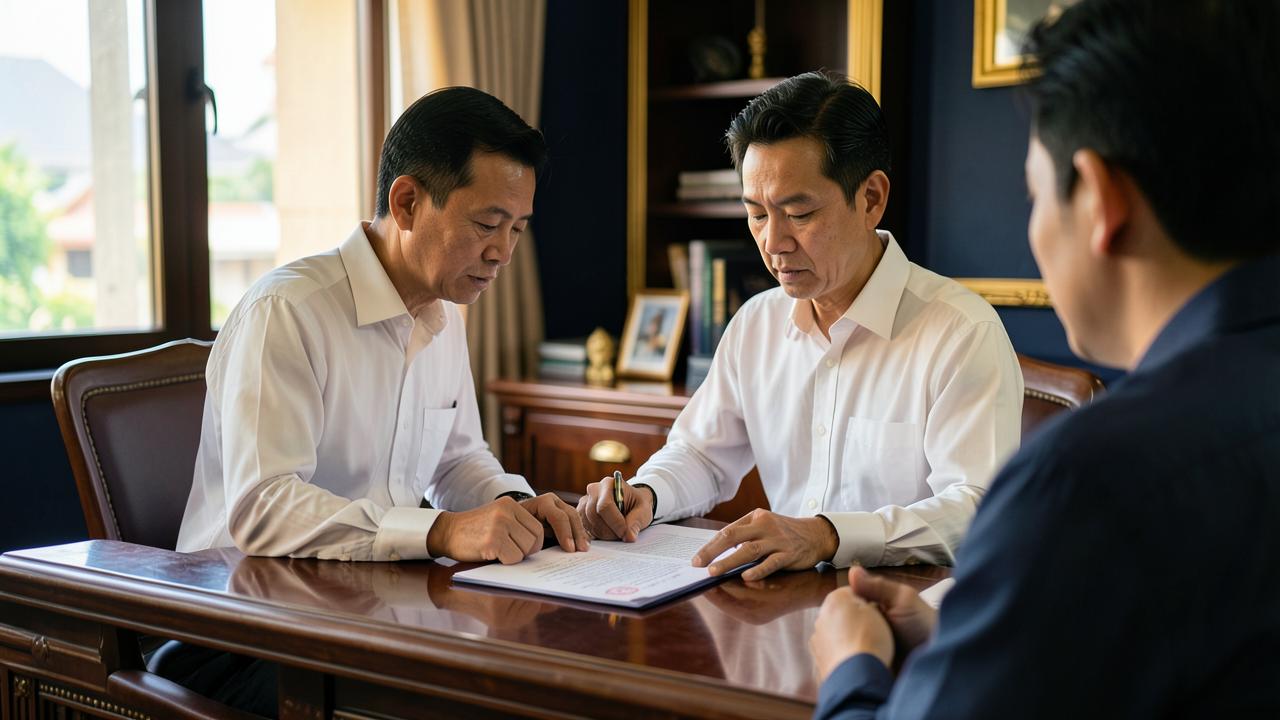
Nonthaburi is a densely populated Bangkok-adjacent province and the seat of several central government departments. Common legal work involves condominiums and housing estates, sale and transfer agreements, disputes with condominium or village juristic persons, consumer cases, and corporate work for mid-sized businesses based outside Bangkok to reduce costs.
Full-lifecycle corporate support: choosing the right vehicle, incorporation, drafting and reviewing contracts, foreign shareholding structures, business licensing, M&A and dissolution.
Jurisdiction and filing requirements should be confirmed for each matter, because practice and required attachments differ between offices.
| Court / authority | What it handles |
|---|---|
| Nonthaburi Provincial Court and Nonthaburi Municipal Court | Civil and criminal cases within the province |
| Nonthaburi Juvenile and Family Court | Family and juvenile matters |
| Nonthaburi Provincial Land Office and branch offices | Registration of land and condominium transactions |
| Department of Business Development (head office located in Nonthaburi) | Company registration, financial statement filing and registered changes |
| Nonthaburi Legal Execution Office | Enforcement of judgments in the province |
| Provincial consumer protection office | Receives consumer complaints before matters reach the courts |
| District offices in Nonthaburi (civil registration) | Civil and marriage registration |
| Nonthaburi Provincial Commercial Office | Local business registration services |
Incorporation with complete documents usually takes a few business days; special licences and BOI approvals take considerably longer.
Timeframes are indicative and depend on the court calendar and the authority handling the matter in Nonthaburi.
Summarised for general understanding only. The application of each provision depends on the facts of your case.
Book III governs company formation, directors’ powers, shareholder meetings and share transfers.
Restricts certain businesses for foreigners and sets out the licensing route.
The basis for BOI tax and non-tax incentives.
Sets corporate tax duties, withholding tax and VAT obligations.
These are constructed examples used to explain procedure. They are not client matters, and no outcome is implied or guaranteed.
Situation: A foreign investor wants more than 49% of a service business.
Usual approach: Check whether the activity falls in the FBA schedules, then compare a foreign business licence, BOI promotion, or restructuring the activity outside the restriction. (Hypothetical.)
Situation: A director resigned but the company never filed the change.
Usual approach: Keep dated proof of the resignation and push the registration through — stale register data can be used to assert liability later.

First check whether the rate was validly approved by a general meeting and whether each instalment is still within its prescription period. If the rate or resolution is invalid, the owner can challenge it — but simply not paying, without a formal objection, may trigger restrictions under the regulations.
Check the contract’s late-delivery penalty and whether any claimed excuse genuinely applies, then serve written notice setting a deadline. If it is still not met, the buyer may continue claiming the penalty or terminate and reclaim sums paid — and the choice affects what can be claimed afterwards.
Consumer cases follow a dedicated, faster procedure: consumers generally file without court fees, and on some issues the burden of proof shifts to the business — for example matters within the business’s exclusive knowledge — making it better suited to goods and services disputes than an ordinary suit.
Activities listed under the Foreign Business Act generally require majority Thai ownership unless a licence, treaty right or BOI promotion applies.
Not universally required by law, but some licences and banking practices call for one.
English contracts are binding, but a certified Thai translation is needed for Thai courts or authorities.
Tell us the facts and we will explain which authority applies, what documents are needed and the realistic timeframe.