Civil and Commercial Code
Book V: marriage, marital property, divorce, parental power and maintenance.

Practice area
Marriage, divorce, custody, wills and estate administration

Family and succession work handled with both legal and personal care: cross-border marriage registration, prenuptial agreements, divorce, custody, adoption, wills and appointment of estate administrators.
Marriage registration completes in one appointment when documents are ready; contested divorce or succession cases take many months or longer.
Timeframes are indicative only and depend on the authority, the court calendar and the completeness of your documents.
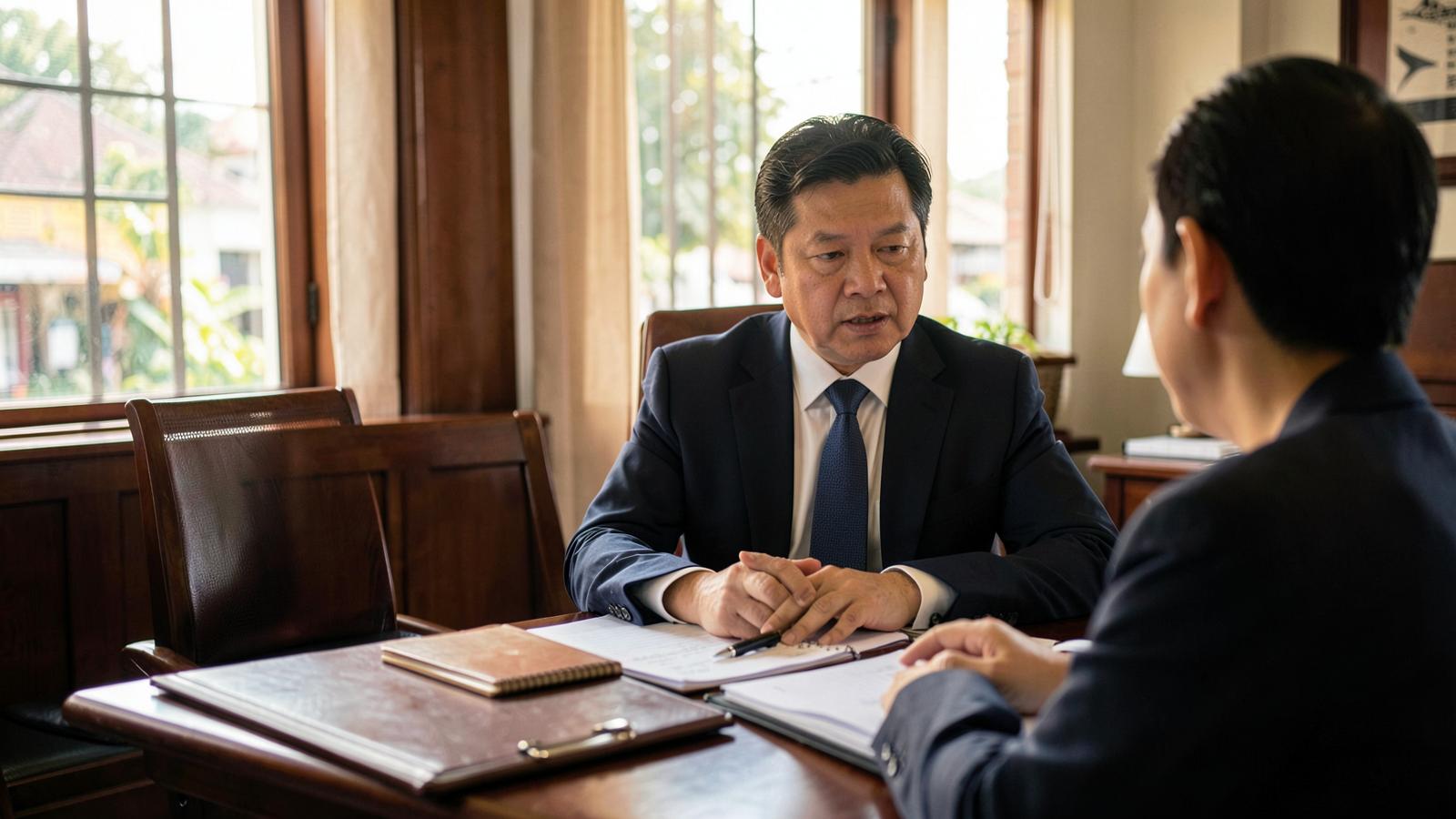
A foreign national marrying in Thailand needs an affirmation of freedom to marry from their embassy in Thailand, translated into Thai and legalised at the Department of Consular Affairs before submission at the district office. Some embassies require appointments weeks in advance.
The district-office registration itself completes in a day when documents are complete, but preparation often takes weeks — particularly the embassy affirmation and consular legalisation. We sequence the steps and appointments so everything connects.
A prenuptial agreement intended to be effective in Thailand must be in writing and registered with the marriage at the district office — a later or separate agreement has no binding effect under Thai law. Where the couple holds assets in several countries, lawyers in both jurisdictions should review it together.
When a deceased person — Thai or foreign — held assets in Thailand, the Thai estate must be administered under Thai law. Heirs or an executor named in a will must first obtain a court order appointing the estate administrator before transferring property, closing bank accounts or selling real estate.
A will made abroad can be effective in Thailand if valid under the law where it was made, but it must be translated into Thai and certified through the proper chain. In practice, a separate Thai will covering Thai assets makes administration considerably faster and simpler.
Thai inheritance tax applies above statutory thresholds, at different rates for natural heirs and other beneficiaries. Advance planning — such as structuring how assets are held — reduces the burden and complexity for beneficiaries. We advise together with tax counsel in each case.
Summarised for general understanding only. The application of each provision depends on the facts of your case.
Book V: marriage, marital property, divorce, parental power and maintenance.
Sets family court jurisdiction, centred on the best interests of the child.
Governs registration of marriage, divorce and legitimation at the district office.
These are constructed examples used to explain procedure. They are not client matters, and no outcome is implied or guaranteed.
Situation: Both parties agree to divorce but need the outcome recognised abroad.
Usual approach: Plan documents from the start: child and property terms, registration of the divorce, and certification/translation for overseas use. (Hypothetical.)
Rules and fees change. Confirm current requirements with the responsible authority before filing.
Province pages set out the courts and authorities with jurisdiction locally, and answer the questions people in that area ask.
Usually an affirmation of freedom to marry from their embassy, translated into Thai and legalised at the Department of Consular Affairs before filing at the district office.
Administrative divorce requires mutual consent and a Thai-registered marriage; otherwise the matter goes to the Juvenile and Family Court.
Tell us the facts and we will explain the options, the documents required and the realistic timeframe before you decide.