Civil Procedure Code
The execution provisions govern writs of execution, seizure, garnishment and auction by the execution officer.
Central Thailand — Nonthaburi
Turning a judgment into actual recovery through lawful tracing, seizure and attachment.
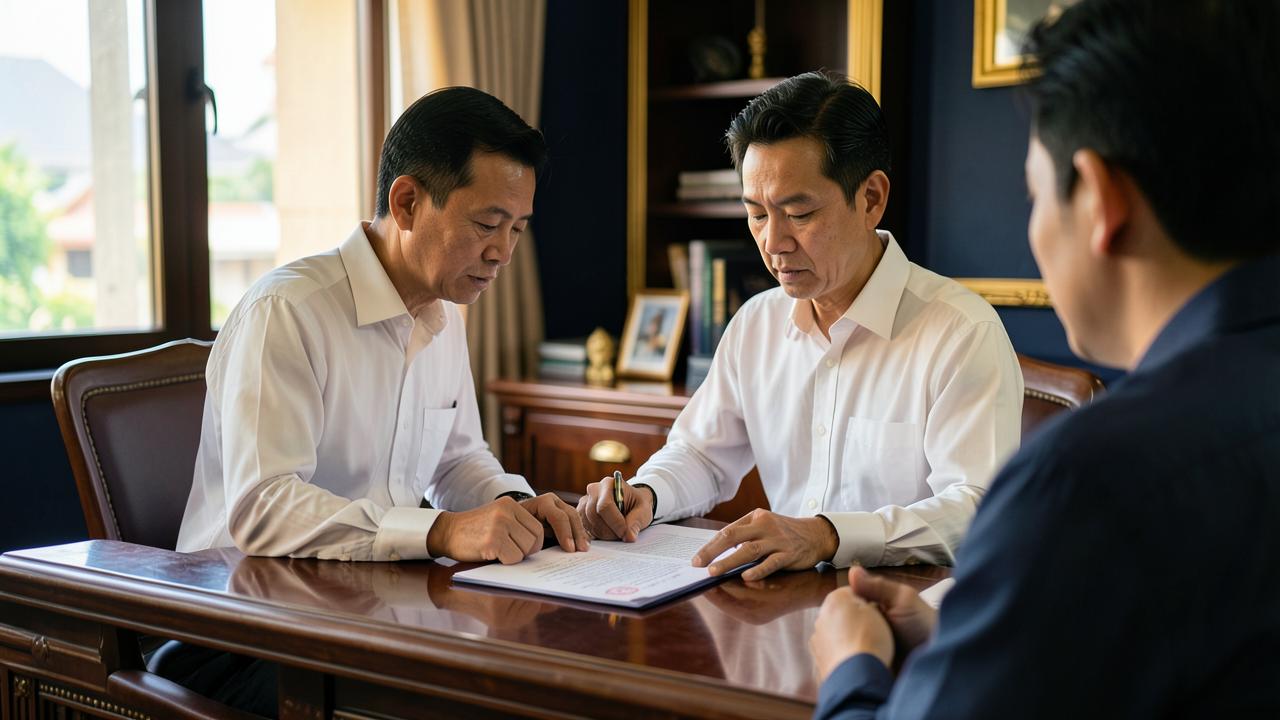
Nonthaburi is a densely populated Bangkok-adjacent province and the seat of several central government departments. Common legal work involves condominiums and housing estates, sale and transfer agreements, disputes with condominium or village juristic persons, consumer cases, and corporate work for mid-sized businesses based outside Bangkok to reduce costs.
Winning a case does not mean being paid. A judgment creditor must enforce within the periods set by the Civil Procedure Code. We handle the full chain: obtaining the writ of execution, opening the file with the Legal Execution Department, tracing the debtor’s assets through lawful channels, seizure or attachment, public auction and distribution of proceeds, as well as objections when a third party disputes ownership of a seized asset.
Jurisdiction and filing requirements should be confirmed for each matter, because practice and required attachments differ between offices.
| Court / authority | What it handles |
|---|---|
| Nonthaburi Provincial Court and Nonthaburi Municipal Court | Civil and criminal cases within the province |
| Nonthaburi Juvenile and Family Court | Family and juvenile matters |
| Nonthaburi Provincial Land Office and branch offices | Registration of land and condominium transactions |
| Department of Business Development (head office located in Nonthaburi) | Company registration, financial statement filing and registered changes |
| Nonthaburi Legal Execution Office | Enforcement of judgments in the province |
| Provincial consumer protection office | Receives consumer complaints before matters reach the courts |
| District offices in Nonthaburi (civil registration) | Civil and marriage registration |
| Nonthaburi Provincial Commercial Office | Local business registration services |
Opening the enforcement file is quick once documents are complete, but the time to auction and distribution depends on the asset type, the execution officer’s schedule and any objections — often several months to several years.
Timeframes are indicative and depend on the court calendar and the authority handling the matter in Nonthaburi.
Summarised for general understanding only. The application of each provision depends on the facts of your case.
The execution provisions govern writs of execution, seizure, garnishment and auction by the execution officer.
The right to enforce a judgment is time-limited; delay can extinguish it.
Applies where the debtor is insolvent, and provides business rehabilitation for corporate debtors.
Section 237 allows revocation of fraudulent transfers made to defeat creditors.
These are constructed examples used to explain procedure. They are not client matters, and no outcome is implied or guaranteed.
Situation: The judgment is final but no land or vehicle is registered to the debtor.
Usual approach: Typical route: lawful asset tracing (salary, deposits, third-party receivables) and checking pre-suit transfers for a fraudulent-transfer challenge. (Hypothetical.)
Situation: After seizure, a third party asserts ownership of the asset.
Usual approach: Prepare clear title and chain-of-ownership evidence; third-party objections have their own deadlines and can delay the auction.

First check whether the rate was validly approved by a general meeting and whether each instalment is still within its prescription period. If the rate or resolution is invalid, the owner can challenge it — but simply not paying, without a formal objection, may trigger restrictions under the regulations.
Check the contract’s late-delivery penalty and whether any claimed excuse genuinely applies, then serve written notice setting a deadline. If it is still not met, the buyer may continue claiming the penalty or terminate and reclaim sums paid — and the choice affects what can be claimed afterwards.
Consumer cases follow a dedicated, faster procedure: consumers generally file without court fees, and on some issues the burden of proof shifts to the business — for example matters within the business’s exclusive knowledge — making it better suited to goods and services disputes than an ordinary suit.
You must obtain a writ of execution and open a file with the Legal Execution Department, then trace and seize the debtor’s assets. The court does not collect money for you automatically.
A transfer made to prejudice creditors can be challenged, but intent must be proved and the action brought within the statutory period.
The law protects a portion of income, so salary cannot be attached in full. We calculate the attachable portion from the debtor’s actual income.
Tell us the facts and we will explain which authority applies, what documents are needed and the realistic timeframe.