Land Code
Governs title documents, registration of rights and foreign land-holding restrictions.

Practice area
Title due diligence, sale, lease and transfer at the Land Office

End-to-end property legal work: title and encumbrance checks, drafting sale or lease agreements, attending the Land Office for transfer, and lawfully structuring foreign ownership.
Title due diligence usually takes a few business days; the Land Office transfer is generally completed in a single day when documents are complete.
Timeframes are indicative only and depend on the authority, the court calendar and the completeness of your documents.
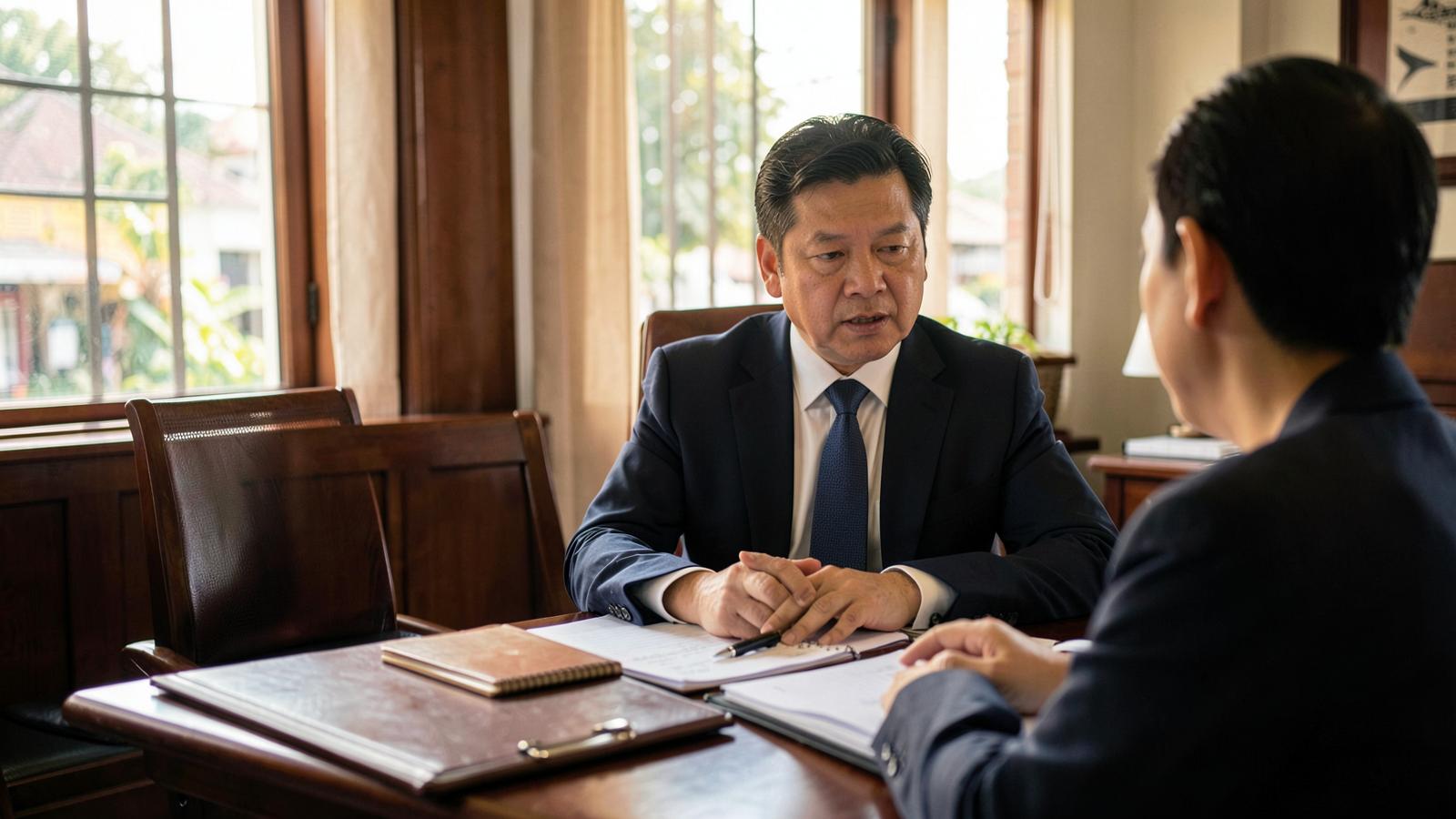
Before signing a land purchase agreement, verify the original title deed at the Land Office: confirm the seller is the true owner, the land is free of mortgages, seizures or usufructs, and the title is a Chanote (N.S.4) — the most clearly transferable type — rather than an N.S.3 or other limited document.
Beyond the deed itself, check the transfer history, the true boundaries against the cadastral survey, and restrictions under town-planning or area-specific laws such as reserved forest or building-control zones. These issues rarely appear in the documents a seller presents.
For condominiums, additionally verify that the building’s foreign quota is not full, the juristic person has no outstanding claims against the unit, and common-area fees are paid up. We issue a written due-diligence report before every purchase.
As a rule, foreign nationals cannot own land in Thailand, subject to narrow statutory exceptions such as permitted investment schemes. Foreigners may own condominium units within the 49 per cent foreign quota of the building’s total area, and may lease land for up to 30 years under general law.
Historically popular structures — such as a Thai company with nominee shareholders holding land — carry high risk because they are unlawful where the intent is to circumvent the restriction. Safer alternatives include a registered long-term lease, a usufruct, or rights in projects the law specifically supports.
Funds for a condominium purchase must be remitted from abroad through a Thai commercial bank with evidence of the inbound transfer (such as a foreign exchange transaction certificate), needed both at transfer and for future repatriation of funds. We prepare this documentation before completion.
Summarised for general understanding only. The application of each provision depends on the facts of your case.
Governs title documents, registration of rights and foreign land-holding restrictions.
Covers sale, lease, hire-purchase, servitude, usufruct and mortgage.
Sets the foreign ownership quota in condominiums and the duties of the juristic person.
These are constructed examples used to explain procedure. They are not client matters, and no outcome is implied or guaranteed.
Situation: A buyer finds access crosses a neighbouring plot with no registered servitude.
Usual approach: Check the cadastral map and land office records before any deposit, and make registering a servitude a condition precedent. (Hypothetical.)
Rules and fees change. Confirm current requirements with the responsible authority before filing.
Province pages set out the courts and authorities with jurisdiction locally, and answer the questions people in that area ask.
Yes, within the building’s foreign quota and with the required evidence of inbound foreign currency.
You may appoint us by power of attorney on the Land Department form, properly certified — and legalised if executed abroad.
Tell us the facts and we will explain the options, the documents required and the realistic timeframe before you decide.