Thai Apostille in force 28 Feb 2027 · Timeline & how to prepare →
Skip to content
Consular legalization of Thai documents at the Ministry of Foreign Affairs
APOSTILLE
In force for Thailand 28 Feb 2027

Apostille in Thailand: when it starts and what to do now

We legalise Thai documents for use abroad using whichever system applies on your filing date: MFA plus embassy now, and an Apostille for Convention parties from 28 February 2027.

Thai Notary Law Attorney Team - Full-service document certification

⚖️ Thai Notary Law Team — attorneys registered with the Lawyers Council of Thailand

Can I get an Apostille in Thailand now?

Not yet. Thailand deposited its accession on 30 June 2026 and the Convention enters into force for Thailand on 28 February 2027. Until then, Thai documents for use abroad are legalised at the Department of Consular Affairs and then at the destination embassy.

Quick Answer: What is an Apostille?

An Apostille is a single certificate under the 1961 Hague Convention confirming the signature and seal on a public document, so other parties accept it without embassy legalisation. For Thailand it is available from 28 February 2027, and only with parties that did not object to Thailand's accession.

📄 Documents Available for Apostille

Birth Certificate Apostille

A Thai birth certificate is a public document, so it can be apostilled from 28 Feb 2027. Before then it is translated, legalised at the MFA and then by the destination embassy. Old or damaged certificates should first be re-extracted at a civil registry office.

See steps
Case-specific timeline
View Details

Marriage Certificate Apostille

Two Thai records are usually requested: the marriage certificate (Kor Ror 3) and the marriage register extract (Kor Ror 2). Before 28 Feb 2027 they are translated and legalised at the MFA and embassy; afterwards Convention parties accept an Apostille.

See steps
Case-specific timeline
View Details

Degree & Transcript Apostille

Degrees and transcripts usually need a university-certified copy or verification letter first, then translation and MFA plus embassy legalisation (before 28 Feb 2027) or an Apostille (after). Some countries also require a separate credential evaluation.

See steps
Case-specific timeline
View Details

Police Clearance Apostille

The certificate is issued by the Royal Thai Police. Before 28 Feb 2027 it is translated if required, legalised at the MFA, then by the embassy; afterwards parties accept an Apostille. Start close to your visa filing because destinations limit how old it can be.

See steps
Case-specific timeline
View Details

Power of Attorney Apostille

The POA is signed before a Notarial Services Attorney, then legalised at the MFA and embassy (before 28 Feb 2027) or apostilled on the notarial certificate (after). The grantor must appear with a passport or ID card.

See steps
Case-specific timeline
View Details

Company Document Apostille

Company affidavits and DBD-certified copies are government records; board resolutions and corporate POAs need notarisation first. Both need MFA and embassy legalisation until 28 Feb 2027.

See steps
Case-specific timeline
View Details

Court Document Apostille

Court documents must be court-certified copies, often with a certificate of finality. They are then translated and legalised at the MFA and embassy (before 28 Feb 2027) or apostilled (after). Enforcement abroad is a separate question of that country's law.

See steps
Case-specific timeline
View Details
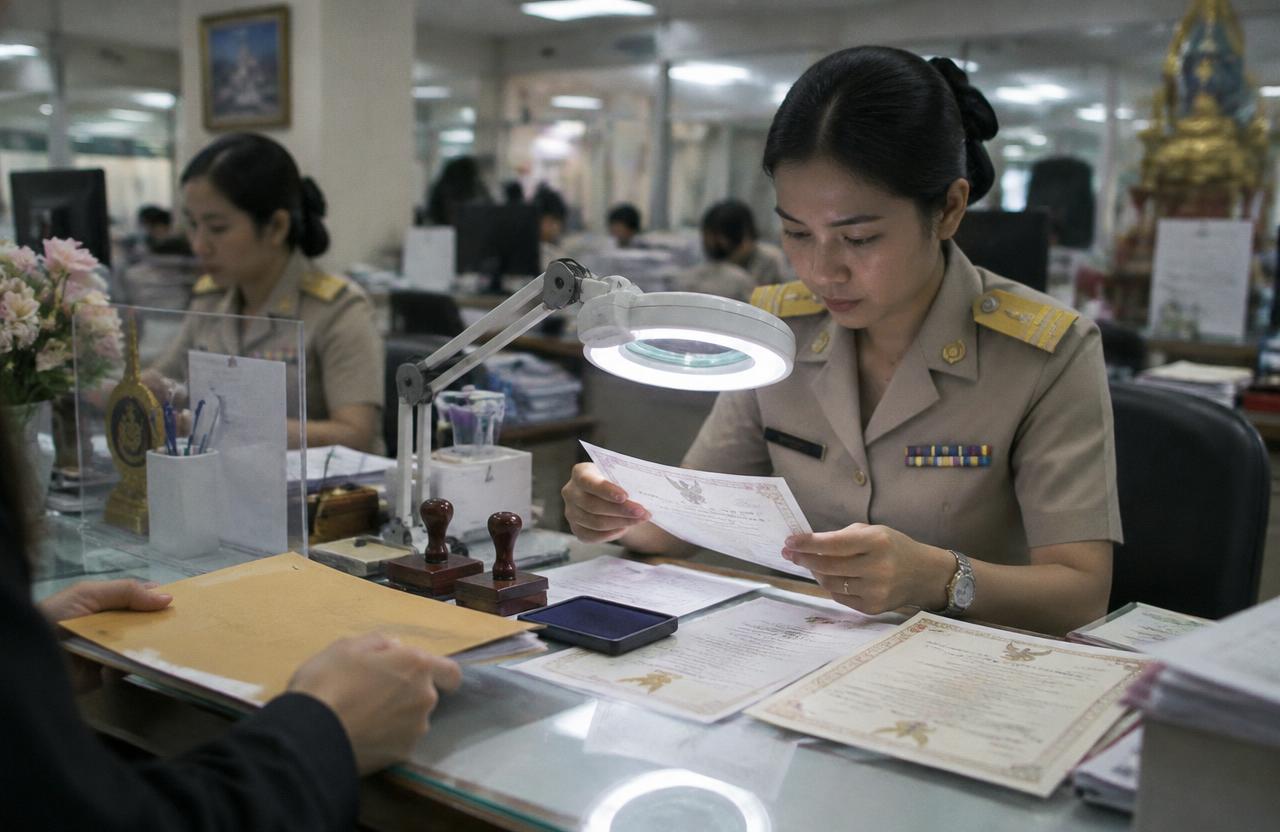
Officer checking documents at a certification counter in Bangkok
Until 27 Feb 2027 Thai documents are still legalised at the MFA before the embassy.

Timeline: the Apostille and Thailand

  1. 5 ต.ค. 2504 / 5 Oct 1961 — The Apostille Convention is concluded at The Hague.
  2. 30 มิ.ย. 2569 / 30 Jun 2026 — Thailand deposits its instrument of accession.
  3. 6-month objection period — Existing parties may object; if one does, the Convention will not apply between it and Thailand.
  4. 28 ก.พ. 2570 / 28 Feb 2027 — Entry into force for Thailand; Thai public documents for parties can use a single Apostille.

What to do now, and what changes after 28 Feb 2027

DestinationUntil 27 Feb 2027From 28 Feb 2027
Apostille parties (e.g. Japan, China, US, UK, Germany, Australia)MFA → embassyApostille from Thailand's designated authority
A party that objected to Thailand (if any)MFA → embassyMFA → embassy
Non-partiesMFA → embassyMFA → embassy

Sources: HCCH status table · Department of Consular Affairs · reviewed 7 Oct 2026

Planning documents during the transition to Apostille

The period before 28 February 2027 needs the most careful planning. Documents legalised through the consular and embassy chain before that date remain fully valid — there is no need to wait for the Apostille if the recipient needs the document soon. The existing chain is the correct and lawful route until the Convention takes effect.

If the document will be used after the Convention takes effect and the destination is a party, waiting for an Apostille may save a step — but weigh this against the recipient’s deadline. Some documents have a limited shelf life with the recipient, and waiting too long can mean the underlying original expires and must be re-issued.

Countries that are not parties to the Convention continue to require consular and embassy legalisation even after 28 February 2027. Checking whether the destination is a party — and whether the Convention is in force between it and Thailand — is always the first step before choosing a route.

Our staff follow announcements from the Department of Consular Affairs and the HCCH continuously. If procedures, official fees or the list of parties change, we explain the impact on your matter when you request a quotation.

❓ FAQ

🏆 Why Thai Notary Law?

Notarial Services Attorneys

Registered with the Lawyers Council of Thailand

Convention status tracked

We check the HCCH table, including objections, before every job

Pre-filing review

Name spelling and legalisation order checked before filing

🔗 Related Services

About Thai Notary Law — Why Trust Us

Thai Notary Law & Service Co., Ltd.

  • 6 licensed Notary Public attorneys registered with the Lawyers Council of Thailand under the Lawyer Act B.E. 2528
  • Document intake from all 77 provinces, with a verifiable job reference on every certificate
  • Head Office: 61 Soi Ladprao 95 (Prangtip), Khlong Chaokhun Sing, Wang Thonglang, Bangkok 10310
  • Company Registration: 0405565001923

Branches & Service Areas

  • 🏢 Bangkok: 61 Soi Ladprao 95 (Prangtip), Khlong Chaokhun Sing, Wang Thonglang, Bangkok 10310
  • 🏢 46/1-2 Moo 2, Chimphli Rd., Nai Mueang, Mueang, Khon Kaen 40000
  • 🏢 31/43 Si Chom Chuen Rd., Mak Khaeng, Mueang, Udon Thani 41000
  • 🏢 161 Moo 1, Pa Kho, Mueang, Nong Khai 43000
  • ✅ Coverage: 50 Bangkok districts + 77 provinces nationwide
  • 🌐 Online service worldwide — available for overseas clients

Notary Public Near You — Near Me

Our physical offices are in Bangkok, Khon Kaen and Udon Thani. Other areas are served by appointment, partners and postal or courier document handling. Send a copy and the destination country so staff can confirm the route before an appointment.

Not sure which route your document needs?

Send a copy and the destination country; we check and recommend the correct route for the date you will use it.

📋 Apostille — Full Service Catalog

Catalog of all Apostille sub-routes — country / document / station / venue with side-by-side timeline and pricing.

Apostille vs Legalization vs Notary

A side-by-side view of international document authentication systems clients ask about most.

FeatureThailand (Notarial Attorney)United States (Notary Public)United Kingdom (Notary)Australia (JP)
Issuing authorityLawyers Council of ThailandSecretary of State (per state)Court of Faculties (Archbishop of Canterbury)State Governor / Dept. of Justice
QualificationLicensed lawyer + specialized training + examNot required to be an attorneyMust be a Solicitor for many yearsAppointed senior citizen
ScopeSignatures, copies, oaths, translationsSignatures primarilyInternational-use documentsCopies and general signatures
International recognitionMFA + Embassy legalization (Thailand not yet Hague)Apostille under HagueApostille under HagueApostille under Hague

Glossary

Key terms used across notary, apostille, and legalization workflows.

Notarization
Formal authentication of signatures, copies, or oaths by an authorized officer.
Apostille
Certification stamp for use in Hague Convention 1961 member states (Thailand’s Apostille accession (30 June 2026) only enters into force on 28 February 2027).
Legalization
Sequential authentication via the MFA and the destination embassy.
Attestation
A witness certification confirming the truth of a statement or signature.
Certified True Copy
A copy officially confirmed to match the original document.
Affidavit
A written statement sworn under oath before an authorized officer.
Power of Attorney (POA)
A legal instrument granting another person authority to act on your behalf.
Notarial Certificate
The certificate issued by a Notary carrying international legal weight.
MFA (Ministry of Foreign Affairs)
The second-tier authority certifying documents for international use.
Consular Legalization
Final certification by the destination country's embassy.
Sworn Translator
A translator registered with a state authority whose translations carry official status.
NAATI
National Accreditation Authority for Translators and Interpreters — the Australian standard.
E-Notarization
Electronic notarization (not yet officially recognized in Thailand).
Notarial Register
The book of notarial acts a Notary is legally required to maintain.
Jurat
The closing clause of an affidavit stating when, where, and before whom the oath was made.

Legal status and conditions before preparing documents

Check the official status and confirm the receiving authority’s procedure before lodging.

Check Thailand’s Apostille status before preparing an application

    Thailand deposited its instrument of accession to the 1961 Hague Apostille Convention on 30 June 2026. The Convention enters into force for Thailand on 28 February 2027. Until 28 February 2027 Thailand does not issue Apostilles. Thai public documents are legalised by the Department of Consular Affairs, Ministry of Foreign Affairs, and then by the destination country mission where that country requires it. From 28 February 2027, a Thai public document within the Convention’s scope and bearing an Apostille from the Thai competent authority will not require further embassy legalisation where the Convention applies between Thailand and the destination, with no objection between them. The receiving authority’s requirements must still be checked. Check the competent authority’s published procedure and checklist before lodging. This page does not invent a future application checklist.

    Source: Department of Consular Affairs, Ministry of Foreign Affairs · verified on 2026-08-17

    What an Apostille is and how it differs from legalisation

    An Apostille is a single certificate under the 1961 Hague Convention confirming the signature, capacity and seal on a public document. Once a document bears an Apostille, other member states must accept it without embassy legalisation, replacing the multi-step chain through the foreign ministry and the destination embassy.

    An Apostille certifies the authenticity of the signature and seal — not the content. The source document must be correct and complete from the start, and where translation is needed, the translation must be certified under the issuing country's procedure before the Apostille is requested.

    Thailand's timeline: acceded, but not yet in force

    Thailand deposited its instrument of accession to the Apostille Convention on 30 June 2026, and the Convention enters into force for Thailand on 28 February 2027, according to the HCCH and the Ministry of Foreign Affairs. Until then, Thai documents for use abroad and foreign documents for use in Thailand still require full consular legalisation — the Department of Consular Affairs plus the destination embassy.

    Even after 28 February 2027, an Apostille works only between Thailand and other parties to the Convention. Non-party states, including most of the Middle East and parts of Asia, still require embassy legalisation. Checking the destination's status on the HCCH website before proceeding is an indispensable step.

    Which documents fall within the Convention

    The Convention covers only "public documents": documents from state authorities such as birth and marriage certificates and company affidavits, court documents, and notarial acts. Documents issued by diplomatic or consular agents and certain commercial or customs documents fall outside its scope.

    Private documents such as contracts or powers of attorney must first become public documents — typically by signing before a Notarial Services Attorney — before entering the certification chain.

    Preparing documents to pass the first time

    Always check three things before filing: first, names and spellings must match the passport exactly; second, the document must be an original or a copy issued by the owning authority, not a plain photocopy; third, if translation is needed, translate and certify the translation before entering the certification chain.

    Some receiving authorities limit document age — a criminal record check issued within three months, for example. Planning backwards from the date the document is needed avoids having to request it again.

    What to send us first

    Send a clear scan of every page including stamps and the back, plus the destination country, the receiving authority and your deadline. This lets us choose the correct route — Apostille or traditional legalisation — and estimate timing accurately before quoting.

    Registered Notary Public Firm · Reg. 0405565001923 · Lawyers Council of Thailand

    Six registered Notarial Services Attorneys — Apostille Certification (effective 2026)

    Thai Notary Law & Service notary attorney team providing Apostille Certification (effective 2026)
    Thai Notary Law & Service Co., Ltd. attorneys & legal consultants — handled by Notarial Services Attorneys registered with the Lawyers Council of Thailand combined experience
    Apostille Certification (effective 2026) by Thai Notary Law & Service — full-service notary, translation, Apostille and NAATI certification
    Thai Notary Law & Service Co., Ltd. business registration certificate no. 0405565001923
    Business Reg.
    Miss Anutaree S. Notary Public license — Notarial Services Attorney B.E. 2566 — provider of Apostille Certification (effective 2026)
    Miss Anutaree S.
    Mr. Jirapan Notary Public license — Notarial Services Attorney B.E. 2551 — provider of Apostille Certification (effective 2026)
    Mr. Jirapan
    Mr. Jirasak Notary Public license — Notarial Services Attorney B.E. 2551 — provider of Apostille Certification (effective 2026)
    Mr. Jirasak
    Mr. Patipan Notary Public license — Notarial Services Attorney B.E. 2551 — provider of Apostille Certification (effective 2026)
    Mr. Patipan
    Mr. Warawut Notary Public license — Notarial Services Attorney B.E. 2551 — provider of Apostille Certification (effective 2026)
    Mr. Warawut
    Mr. Wiwat Notary Public license — Notarial Services Attorney B.E. 2551 — provider of Apostille Certification (effective 2026)
    Mr. Wiwat

    All documents are signed and sealed by Notarial Services Attorneys registered under the Lawyers Council of Thailand B.E. 2551 / 2566 regulations, ready for Consular Legalization at Thailand's MFA and any destination embassy.

    Last updated:
    Published Updated

    📍 How to reach HQ (Lat Phrao 95)

    Address: 61 Soi Lat Phrao 95 (Prangthip), Khlong Chaokhun Sing, Wang Thonglang, Bangkok 10310, Thailand · On-site parking · Open Mon-Fri 09:00-18:00

    1. MRT Lat Phrao — Taxi/Car · ~8 min
    2. BTS Mo Chit — Taxi/Car · ~15 min
    3. Central Ladprao — Taxi/Car · ~10 min
    4. Don Mueang Airport — Taxi/Car · ~25 min
    5. Suvarnabhumi Airport — Taxi/ARL · ~45 min
    Open in Google Maps →

    Related services

    Official references

    Related entities & references

    Notary Public ThailandEmbassy of Australia in ThailandEmbassy of the United States in ThailandEmbassy of the United Kingdom in ThailandPower of AttorneyAffidavit of SupportCertified True CopySworn TranslatorBangkokKhon KaenChiang MaiPhuketPattayaMarriage Registration ThailandCriminal Background Check (Police Clearance Thailand)Hague ApostilleConsular LegalizationDocument Translation Thai-EnglishMOJ Sworn TranslationCivil and Commercial Code of ThailandLawyers Act B.E. 2528Statelessness Reduction (UNHCR)

    Apostille — Hague Convention

    Related pages in the same topical cluster so you can find the best fit for your case.

    Cross-cluster bridges

    Reviewed by ฝ่ายโนตารีพับลิกและรับรองเอกสาร

    คู่มือเชิงลึก: บริการ Apostille (อนุสัญญากรุงเฮก)

    อัปเดตล่าสุด 2026-07-01

    สรุปคำตอบทันที

    อนุสัญญา Apostille จะมีผลกับไทยวันที่ 28 ก.พ. 2027 (ไทยเข้าเป็นภาคี 30 มิ.ย. 2026) จนถึงวันนั้น เอกสารที่ออกในไทยจึงใช้เส้นทางรับรองนิติกรณ์ที่กรมการกงสุล กระทรวงการต่างประเทศ แล้วรับรองต่อที่คณะผู้แทนทางการทูตของประเทศปลายทางเมื่อปลายทางกำหนด

    บริการ บริการ Apostille (อนุสัญญากรุงเฮก) ของ Thai Notary Law & Service Co., Ltd. ดูแลโดยทนายความที่ขึ้นทะเบียนกับสภาทนายความ เริ่มจากถามว่าเอกสารจะไปใช้ที่ประเทศใดและหน่วยงานใดเป็นผู้รับ เพราะข้อกำหนดของผู้รับเป็นตัวกำหนดว่าต้องแปล รับรอง หรือส่งต่อสถานทูตแบบใด

    สำหรับเอกสารที่จะใช้ในประเทศภาคีอนุสัญญา Apostille: ไทยยื่นภาคยานุวัติสารเมื่อ 30 มิถุนายน 2569 และอนุสัญญามีผลกับไทยวันที่ 28 กุมภาพันธ์ 2570 ก่อนวันนั้นยังต้องใช้การรับรองโดยกรมการกงสุล กระทรวงการต่างประเทศ และสถานทูตปลายทางตามที่ผู้รับกำหนด

    ฐานทางกฎหมายและกฎระเบียบที่เกี่ยวข้อง

    การให้บริการ บริการ Apostille (อนุสัญญากรุงเฮก) ตั้งอยู่บนฐานทางกฎหมายและกฎระเบียบที่ประกาศโดยหน่วยงานราชการของประเทศไทยและหน่วยงานระหว่างประเทศที่เกี่ยวข้อง ทุกข้อความในหน้านี้ที่กล่าวถึงข้อบังคับทางกฎหมายจะอ้างอิงถึงประกาศทางการที่สามารถตรวจสอบได้จากลิงก์ปฐมภูมิ (primary source)

    • อนุสัญญากรุงเฮก 5 ตุลาคม 1961 — ยกเลิกข้อกำหนดให้เอกสารต่างประเทศต้องรับรองผ่านสถานทูต ใช้ apostille เพียงชั้นเดียว

    แหล่งอ้างอิงปฐมภูมิ: https://www.hcch.net/en/instruments/conventions/full-text/?cid=41

    • ประกาศกระทรวงการต่างประเทศเรื่องการเข้าเป็นภาคีอนุสัญญากรุงเฮก พ.ศ. 2568 — มีผลบังคับใช้ 1 ธันวาคม 2568 กรมการกงสุลเป็น Competent Authority

    แหล่งอ้างอิงปฐมภูมิ: https://consular.mfa.go.th

    • ระเบียบกระทรวงการต่างประเทศว่าด้วยการรับรองเอกสาร พ.ศ. 2539 — ยังคงใช้สำหรับประเทศที่ไม่ใช่สมาชิกอนุสัญญา (consular legalization)

    แหล่งอ้างอิงปฐมภูมิ: https://consular.mfa.go.th

    หมายเหตุ: เนื้อหาในหน้านี้เป็นข้อมูลทั่วไปเพื่อการศึกษาและอ้างอิงเท่านั้น ไม่ใช่คำแนะนำทางกฎหมายที่ผูกพัน (legal opinion) หากกรณีของท่านมีความซับซ้อนหรือมีเงื่อนไขพิเศษ กรุณาปรึกษาทนายความโดยตรงก่อนดำเนินการ ส่งภาพเอกสารและข้อกำหนดของผู้รับมาให้ทีมงานตรวจก่อนเริ่มงานได้

    ปัญหาที่ลูกค้าพบบ่อยและวิธีที่เราช่วยแก้

    ประเด็นที่ควรตรวจก่อนเริ่มงาน บริการ Apostille (อนุสัญญากรุงเฮก) มีดังนี้

    • ไม่รู้ว่าประเทศปลายทางอยู่ในอนุสัญญาเฮกหรือไม่
    • ไม่แน่ใจว่าต้อง apostille ต้นฉบับหรือคำแปล (หรือทั้งคู่)
    • เอกสารเอกชนต้องผ่าน notary + รับรองสภาทนายก่อน apostille
    • บางประเทศคัดค้าน apostille ของไทย (ต้องตรวจสอบก่อนดำเนินการ)
    • ต้องแปลเป็นภาษาปลายทางเพิ่มเติมหลัง apostille
    • apostille สำเนา vs ต้นฉบับ ให้ผลไม่เหมือนกัน

    ปัญหาส่วนใหญ่ป้องกันได้ด้วยการยืนยันข้อกำหนดของหน่วยงานผู้รับก่อน แล้วเลือกช่องทางรับรองให้ตรงกับข้อกำหนดนั้น

    ขั้นตอนการดำเนินงานทีละขั้น

    ขั้นตอนหลักของ บริการ Apostille (อนุสัญญากรุงเฮก) มี 6 ขั้น กำหนดเวลาขึ้นกับคิวของหน่วยงานราชการและสถานทูต เจ้าหน้าที่แจ้งหลังตรวจเอกสาร

    1. ประเมินประเภทเอกสาร — จำแนกเป็นเอกสารราชการ (ไม่ต้อง notarize) หรือเอกสารเอกชน (ต้อง notarize + สภาทนาย)
    2. Notarize (ถ้าเป็นเอกสารเอกชน) — ทนาย Notarial Services ประทับตรารับรองที่สำนักงาน + รับรองสภาทนาย
    3. ยื่น apostille ที่กรมการกงสุล — ทีมนำเอกสารไปยื่นที่กรมการกงสุล แจ้งวัฒนะ
    4. รอผลและรับ apostille — เจ้าหน้าที่อธิบายรายละเอียดและกำหนดเวลาของขั้นตอนนี้หลังตรวจเอกสาร
    5. แปลภาษาปลายทาง (ถ้าต้องการ) — แปลภาษาที่ประเทศปลายทางต้องการ พร้อมรับรอง MFA อีกชั้นถ้าจำเป็น
    6. จัดส่งไปประเทศปลายทาง — DHL/FedEx พร้อม tracking หรือรับที่สำนักงาน

    หากมีวันนัดหรือกำหนดส่งที่เลื่อนไม่ได้ ให้แจ้งตั้งแต่ขอใบเสนอราคา ทีมงานจะบอกก่อนเริ่มงานว่าทันหรือไม่

    หมายเหตุเฉพาะประเทศ/สถานทูตปลายทาง

    ข้อกำหนดแตกต่างตามประเทศปลายทาง ข้อมูลด้านล่างอ้างอิงแหล่งทางการ ควรตรวจซ้ำกับผู้รับก่อนยื่นเสมอ

    • สหรัฐอเมริกา — ยอมรับ apostille ของไทยเต็มรูปแบบ ไม่ต้องรับรองสถานทูตซ้ำ

    ข้อมูลจากแหล่งทางการ: https://www.hcch.net/en/instruments/conventions/full-text/?cid=41

    • สหราชอาณาจักร — ยอมรับ apostille ของไทย ตามอนุสัญญา ต้องแปลอังกฤษถ้าเอกสารเป็นไทย

    ข้อมูลจากแหล่งทางการ: https://www.gov.uk/get-document-legalised

    • เยอรมนี — ยอมรับ apostille + ต้องแปลเยอรมันโดย vereidigter Übersetzer

    ข้อมูลจากแหล่งทางการ: https://bangkok.diplo.de

    • จีน (แผ่นดินใหญ่) — ภาคี Apostille ตั้งแต่ 7 พ.ย. 2566 — เอกสารไทยใช้ได้ตั้งแต่ 28 ก.พ. 2570

    ข้อมูลจากแหล่งทางการ: https://www.hcch.net/en/instruments/conventions/full-text/?cid=41

    • ประเทศนอกอนุสัญญา (เวียดนาม/UAE/ซาอุ) — ยังต้อง consular legalization + สถานทูตปลายทาง apostille ใช้ไม่ได้

    ข้อมูลจากแหล่งทางการ: https://consular.mfa.go.th

    หากประเทศปลายทางที่ท่านสนใจไม่อยู่ในรายการข้างต้น กรุณาแจ้งกับทีมงานเมื่อขอใบเสนอราคา ทีมจะตรวจสอบข้อกำหนดล่าสุดกับสถานทูตหรือกรมการกงสุลก่อนยืนยันขั้นตอน เพื่อป้องกันการถูกปฏิเสธเอกสารที่ปลายทาง

    คำถามที่ลูกค้าถามบ่อย (Speakable FAQ)

    คำถามที่พบบ่อยเกี่ยวกับ บริการ Apostille (อนุสัญญากรุงเฮก)

    Q: อนุสัญญา Apostille จะมีผลกับไทยวันที่ 28 ก.พ. 2027 (ไทยเข้าเป็นภาคี 30 มิ.ย. 2026) จนถึงวันนั้น เอกสารที่ออกในไทยจึงใช้เส้นทางรับรองนิติกรณ์ที่กรมการกงสุล กระทรวงการต่างประเทศ แล้วรับรองต่อที่คณะผู้แทนทางการทูตของประเทศปลายทางเมื่อปลายทางกำหนด

    A: 1 ธันวาคม 2568 (2025) — เอกสารที่ apostille หลังวันนี้ใช้ได้ในกว่า 125 ประเทศ

    Q: ค่าธรรมเนียมรัฐเท่าไร?

    A: สอบถามราคากับเจ้าหน้าที่ ที่กรมการกงสุล

    Q: เอกสารประเภทใดที่ apostille ได้?

    A: เอกสารราชการทุกประเภท + เอกสารเอกชนที่ผ่าน notarize + สภาทนาย

    Q: ต้องแปลก่อน apostille หรือไม่?

    A: ขึ้นอยู่กับประเทศปลายทาง ส่วนใหญ่ apostille ต้นฉบับก่อน แล้วแปลในประเทศปลายทาง

    Q: apostille แล้วยังต้องรับรองสถานทูตอีกไหม?

    A: ไม่ต้องสำหรับประเทศสมาชิกอนุสัญญา (หลายประเทศ)

    Q: สำเนาใช้ apostille ได้ไหม?

    A: ได้ ต้องเป็นสำเนาที่ทนายรับรองว่าถูกต้อง (Notarized Copy)

    Q: apostille หมดอายุไหม?

    A: ไม่หมดอายุในตัวเอง แต่หน่วยงานปลายทางอาจกำหนดอายุยอมรับ (6 เดือน–2 ปี)

    Q: เอกสารต่างประเทศใช้ในไทยต้องทำอย่างไร?

    A: ต้อง apostille ที่ประเทศต้นทาง + แปลรับรอง MOJ ที่ไทย

    หากคำถามไม่อยู่ในรายการ ส่งข้อความพร้อมภาพเอกสารมาให้ทีมงานตรวจได้

    ขั้นตอนต่อไป — ปรึกษาทนายของเรา

    ส่งเอกสารให้ตรวจก่อนยื่นสำหรับ บริการ Apostille (อนุสัญญากรุงเฮก) ได้ทาง LINE อีเมล หรือโทรศัพท์ โปรดแจ้งประเทศปลายทาง หน่วยงานผู้รับ และวันที่ต้องใช้เอกสาร

    • สำนักงาน: กรุงเทพฯ (ลาดพร้าว) และอุดรธานี
    • จังหวัดอื่น: นัดหมายรับ-ส่งเอกสารหรือพบนอกสถานที่ผ่านเครือข่ายพาร์ตเนอร์
    • ใบเสนอราคา: แจ้งขอบเขตงานและค่าใช้จ่ายก่อนเริ่มงาน